
Siemens unveils passively safe traffic-signal poles

Siemens has unveiled a range of passively safe traffic signal poles that are performance-rated against BS EN 12767 They come in a wide variety of forms, finish and lengths from 2-6m, said Keith Manston, head of product management for Siemens. The poles are CE marked with a specification label confirming key features as required by BS EN 12899 including construction material, corrosion resistance and strength characteristics.
March 12, 2018 Read time: 2 mins
Siemens supports the bright lights with new passively safe traffic signal poles
Siemens has unveiled a range of passively safe traffic signal poles that are performance-rated against BS EN 12767


They come in a wide variety of forms, finish and lengths from 2-6m, said Keith Manston, head of product management for 1134 Siemens. The poles are CE marked with a specification label confirming key features as required by BS EN 12899 including construction material, corrosion resistance and strength characteristics.

“Siemens conducted extensive wind tunnel testing to evaluate real loads experienced by traffic signals poles when fully equipped,” said Manston. “Each pole has been characterised to ensure it is not overloaded either during initial installation or as part of a typical junction improvement.”

The aluminium construction makes them up to 50% lighter than the equivalent steel pole, improving health and safety by considerably easing installation. Varieties include straight poles and ‘cranked’ poles that are typically used at pedestrian crossings.

They’re mid-level termination design maintains a standard 114mm mounting diameter over the whole pole length. They come in a variety of colours including black, grey and silver finish.

For more information on companies in this article

Related Content

  • Siemens system helps enforce weight limit on New Bridge, Oxfordshire
    May 18, 2018
    Siemens UK is supplying 21st century technology to help protect a 13th century stone arch bridge over the River Thames in England. The 665m-long New Bridge has national recognition and statutory protection from alteration, but is suffering from the weight of modern vehicles. Siemens’ system is the first time that automatic number plate recognition cameras are being used to enforce a road weight restriction in the county of Oxfordshire. “Evidence downloaded from the cameras can be used to demonstrate that d
  • Innovations are pushing boundaries in the concrete road paving sector
    February 18, 2013
    The concrete road paving market continues to develop - Mike Woof reports Concrete road paving technology continues to evolve, with new equipment and techniques coming to market. Although concrete road construction has been used for many years, problems with early generation technologies affected this market segment. The first concrete roads were constructed in sections, which led to problems at joints but these were addressed many years ago with the advent of slipform paving. Concrete roads constructed in t
  • SICK’s LMS 1000 and RMS 1000 sensors deliver the goods
    January 7, 2019
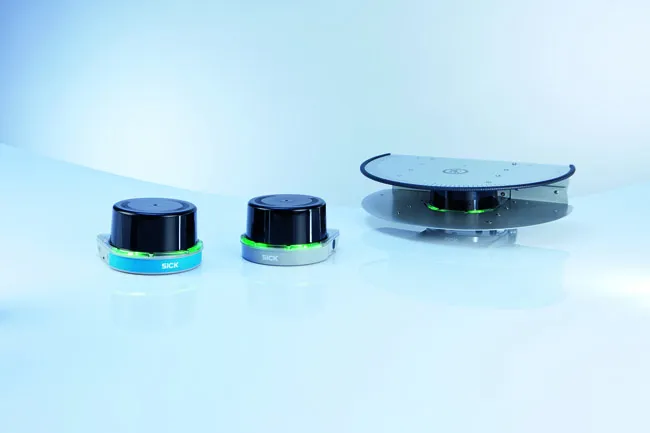
    SICK says that it’s recently launched LMS1000 and MRS1000 infrared LiDAR sensors deliver more accurate and reliable distance sensing and measurement, especially in difficult conditions. The robust, compact sensors weigh just 1.2kg and come with rotatable connectors for easy mounting on gantries. Heavy rain, mist, dust or snow can lead to false signals, explained Neil Sandhu, SICK’s national product manager for imaging, measurement, ranging and systems. The addition of SICK’s triple-echo HDDM+ - High Defini
  • LiuGong’s new lubricant innovation
    July 4, 2018
    The Technical Standards Development and Application Demonstration Base of Graphene-Modified Lubricant, was launched at LiuGong’s Global R&D Centre in Liuzhou. Co-built by the China Innovation Alliance of the Graphene Industry and Guangxi Liugong Machinery, it marks the first base in China that concentrates on the transformation of graphene’s scientific research into real world applications. The partnership also includes building a joint laboratory and undertaking independent test tasks from other companies