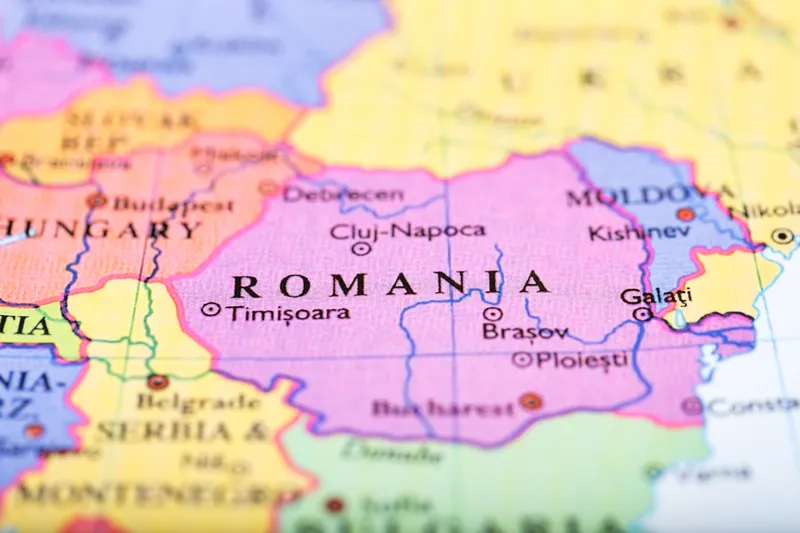
The motorway segments in question are the 109km long Ungheni-Iasi-Targu Neamt segment, which will have a bridge built over the river Prut, the 100km long Rasnov-Brasov-Ploiesti motorway section, and the 550km long motorway segment between Alexandria and Lugoj.
Romanian media reported in November that the
He met on Tuesday at the Government headquarters in Bucharest with a World Bank delegation led by Tatiana Proskuryakova.
The Government will set up a coordination committee for the future highway, under the General Secretariat of the Government, led by the deputy prime minister Ion Marcel Ciolacu, as well as a project implementation unit, under the Ministry of Transport, responsible for the technical component.
The A3 highway, with only two operational sections, will have a length of more than 600 kilometers and will link Bucharest to the border with Hungary. The works were delayed for many years on several segments, especially on the most difficult one, Comarnic-Brasov.
In May last year….A new report highlights the slow pace of road construction in Romania. This reveals that during 2016, the country only had a total of 747km of motorway class roads. The survey was carried out by Romania's National Institute of Statistics (INS). The report reveals that this is the same total motorway length as in 2015, highlighting that no new stretches were opened to traffic during 2016. Motorways account for a mere 4.2% of Romania’s total road network. The country has 86,080km of roads in all, of which 36% are either cobbled or of gravel construction and are not surfaced with either asphalt or concrete. During 2016, just 4% of Romania’s total road network saw any upgrades at all.

Romania eyes PPP for three projects, including the Rasnov-Ploiesti
The Government of Romania will build three motorway segments through a public-private partnership.
The motorway segments in question are the 109km long Ungheni-Iasi-Targu Neamt segment, which will have a bridge built over the river Prut, the 100km long Rasnov-Brasov-Ploiesti motorway section, and the 550km long motorway segment between Alexandria and Lugoj.
The Government of Romania will build three motorway segments through a public-private partnership.
For more information on companies in this article
Related Content