High performance, special asphalt mixes

There has been a steady increase in mechanical loads applied to road surfaces in the global highway sector. This stems from a combination of increasing traffic volumes, plus heavier trucks. To prevent roads from cracking up under the strain, it has required the development of innovative new asphalt mixes able to cope with the increased mechanical loads. As a result, the research sector and the asphalt producers have been working together to develop special asphalt mixes, which often require special material
October 3, 2018 Read time: 2 mins
Efficient production of special mixes depends on an array of factors
There has been a steady increase in mechanical loads applied to road surfaces in the global highway sector. This stems from a combination of increasing traffic volumes, plus heavier trucks. To prevent roads from cracking up under the strain, it has required the development of innovative new asphalt mixes able to cope with the increased mechanical loads. As a result, the research sector and the asphalt producers have been working together to develop special asphalt mixes, which often require special materials. However, this has also required asphalt plants to be able to produce a much wider range of mixes, from conventional dense mixes to discontinuous mixes with modified asphalt, while providing the same levels of quality and productivity.


As a result, the 364 Wirtgen Group company 6241 Ciber utilised its extensive experience in developing technologies for asphalt plants to develop the dry mix system using a continuous flow mixer. According to the firm, this allows homogenisation of the aggregates before injection of the asphalt binder. The coarse aggregates are routed from the dryer, with fines reused from the bag filter, the external filler and fibres. This is important to ensure the constant thickness of the bitumen film on the surface of the aggregate, ensuring the quality of the mix. The technology is crucial for the production of SMA-type mixes that require cellulose fibres. These fibres have to be thoroughly homogenised in the dry aggregates so as to avoid the risk of any segregation in the mix.

Ciber says that another technology introduced with its latest iNOVA Series of asphalt plants is for automatic control of mixing time between aggregates and asphalt binder. The adhesion capacity between these materials depends mainly on the characteristics of the aggregates. This itself relates to the quantity and type of clay minerals present. But there is a wide variation depending on the origin and processes of formation of the aggregates. As a result, adjusting the mixing time according to the need is crucial for the production of homogeneous mixtures. And the mixing time can be regardless of the characteristics of the materials and design.

For more information on companies in this article

Related Content

  • Road repairs take to the air
    November 29, 2018
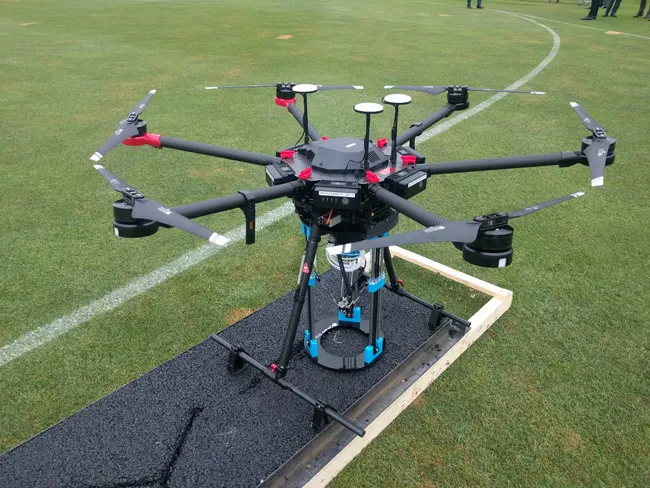
    Automated road repairs using 3D printing could save money and reduce disruption, reports Kristina Smith It’s the middle of the night and in the street below a team is busy carrying out repairs to the road surface. But there isn’t a human in sight. A road-repair drone has landed at the site of a crack and a 3D asphalt printer is now busy filling in that crack. A group of traffic cone drones have positioned themselves around the repair location to protect the repair drone and divert traffic around it.
  • RCC road paving technology growing in demand
    November 13, 2014
    US contractor Robert Smith based in Chattanooga has long experience in the asphalt paving market but has recently added roller compacted concrete (RCC) to its paving portfolio. This heavy-duty cement mix can be poured as quickly as asphalt and the company has now developed its skills at laying large areas of RCC in just a few days for its industrial client base. Demand has grown and RCC work now accounts for over 90% of the firm’s workload, which it carries out using a Volvo CE paver.
  • Recycled porous asphalt trial in Netherlands
    May 15, 2017
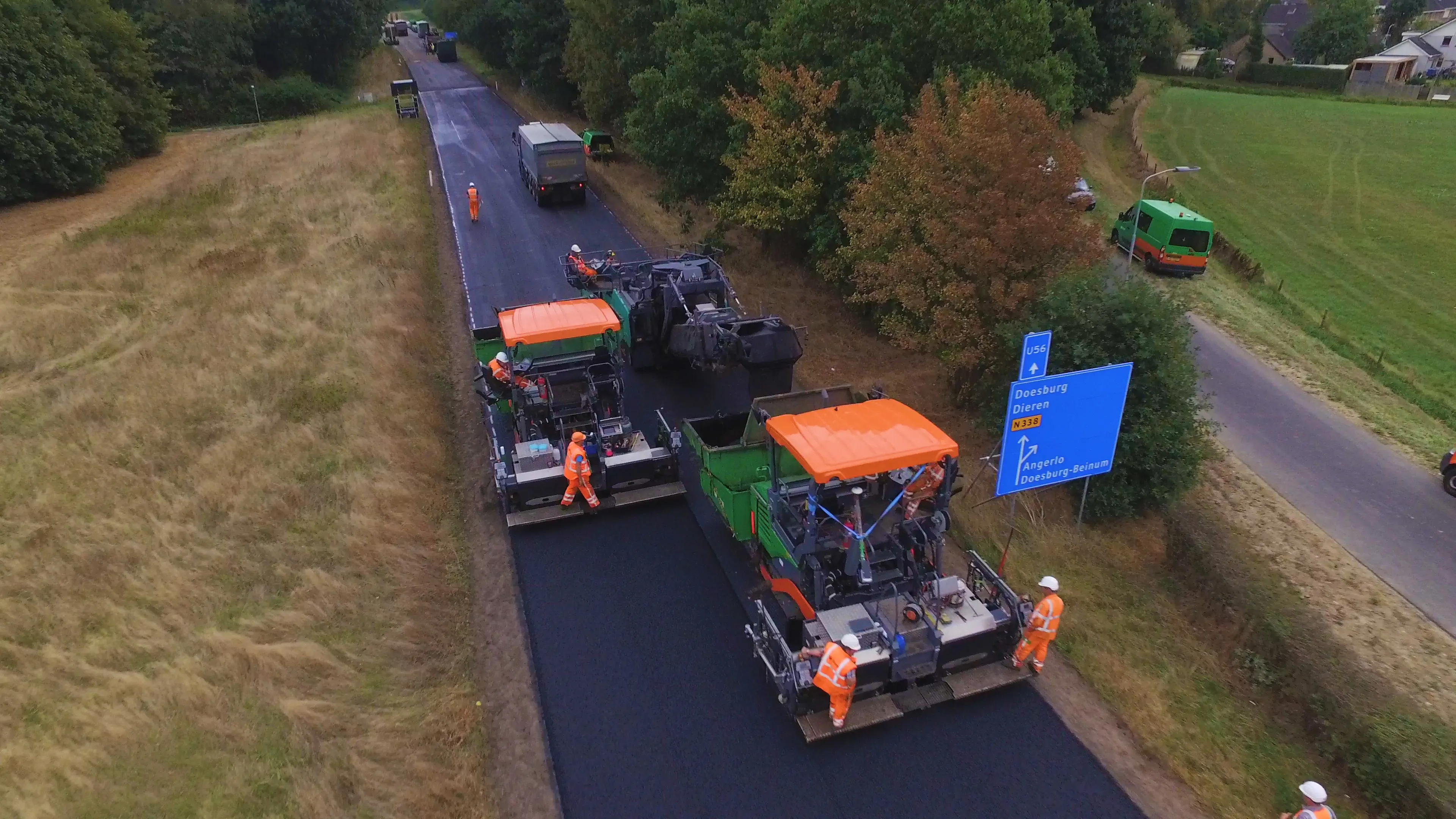
    An innovative reuse of porous asphalt is being tested on secondary roads in the Netherlands. The promising LE2AP European Life demonstration project involves test sections of durable, silent asphalt on roads in the Netherlands. LE2AP stands for Low Emission 2 Asphalt Pavement, with the 2 indicating reduced emissions for both CO2 and sound. BAM recently installed two test sections of a novel surface material in collaboration with the Dutch provinces of Noord-Brabant and Gelderland. This asphalt road surface
  • Recycled porous asphalt trial in Netherlands
    May 15, 2017
    An innovative reuse of porous asphalt is being tested on secondary roads in the Netherlands. The promising LE2AP European Life demonstration project involves test sections of durable, silent asphalt on roads in the Netherlands. LE2AP stands for Low Emission 2 Asphalt Pavement, with the 2 indicating reduced emissions for both CO2 and sound. BAM recently installed two test sections of a novel surface material in collaboration with the Dutch provinces of Noord-Brabant and Gelderland. This asphalt road surface