
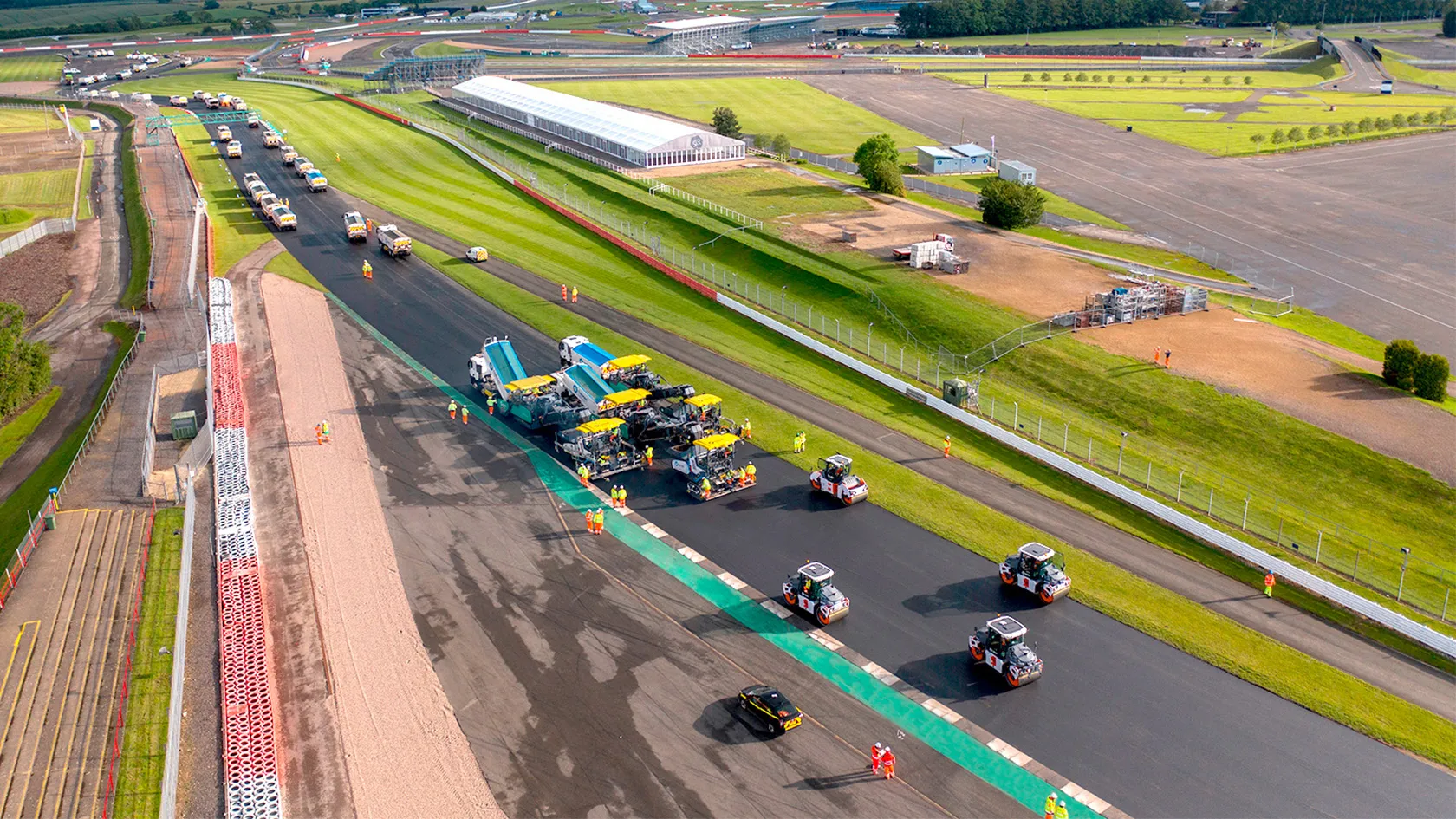
In collaboration with specialist engineering consultant Studio Dromo, contractor Tarmac led the work to reprofile and resurface the legendary motor racing circuit in time for the British Grand Prix.
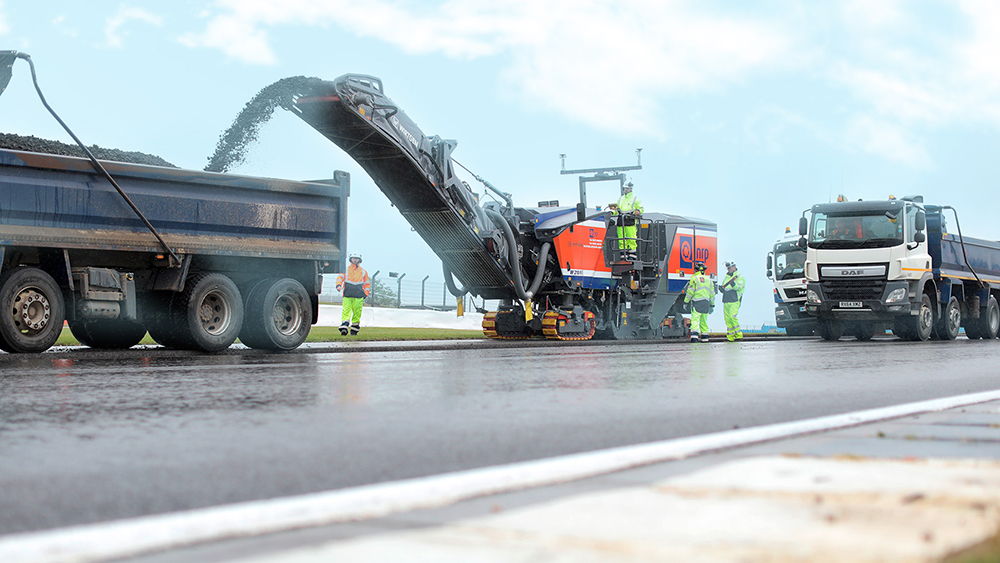
The operator of the Silverstone circuit took advantage of the project to mill off and renew the asphalt package, and also to reprofile the track. In a 3D digital terrain model, the engineers identified uneven sections and sections prone to aquaplaning. The planners optimised the design of the racetrack and used 3D GPS-guided digital control systems to ensure accuracy when removing the surface using Wirtgen milling machines.
A combination of Vögele pavers and Hamm rollers repaved the track with the special asphalt mix provided by two Benninghoven plants.
The need to smoothen bumps, prevent aquaplaning and change the cambers in corners were the main reasons for reprofiling the Silverstone racing circuit.
Italian circuit design specialist Studio Dromo generated a 3D model of the track to identify any weak points. Total stations then transmitted milling parameters directly to the Wirtgen planers, delivering high precision. Control on the machines was achieved using the firm’s LEVEL PRO ACTIVE system. Fully part of the machines' controls, the levelling system allows a high level of automation. The firm says its LEVEL PRO ACTIVE is compatible with 3D systems from key suppliers.
Milling parameters from the 3D terrain model were received by laser sensors and processed by the Wirtgen cold milling machines. The permissible deviation of ±2mm over a distance of 13m meant that the use of new technology was necessary.
The engineers simplified the mounts for the sensor systems on the weather canopy of the machines, making it easier for the milling machine operators. Although the average milling depth for the whole circuit was 70mm, it varied continuously around the racetrack. Milling work took the Tarmac team four days to remove 87,000m² of asphalt from the circuit.
Tarmac used washing to remove most of the fines in the crushed stone, which was then used for the mix produced by two Benninghoven asphalt mixing plants at Tarmac’s Elstow and Harper Lane sites. The complex mixes used special bitumen and aggregate grades and the plants were able to deliver the high quality needed for the Formula 1 track. The result is a durable asphalt surface that can cope with high lateral loads from hard braking and fast cornering. The material will also reduce the risk of new bumps appearing on certain sections of the circuit. Onsite logistics were also challenging, with the need to transport 360tonnes of asphalt/hour to the circuit.
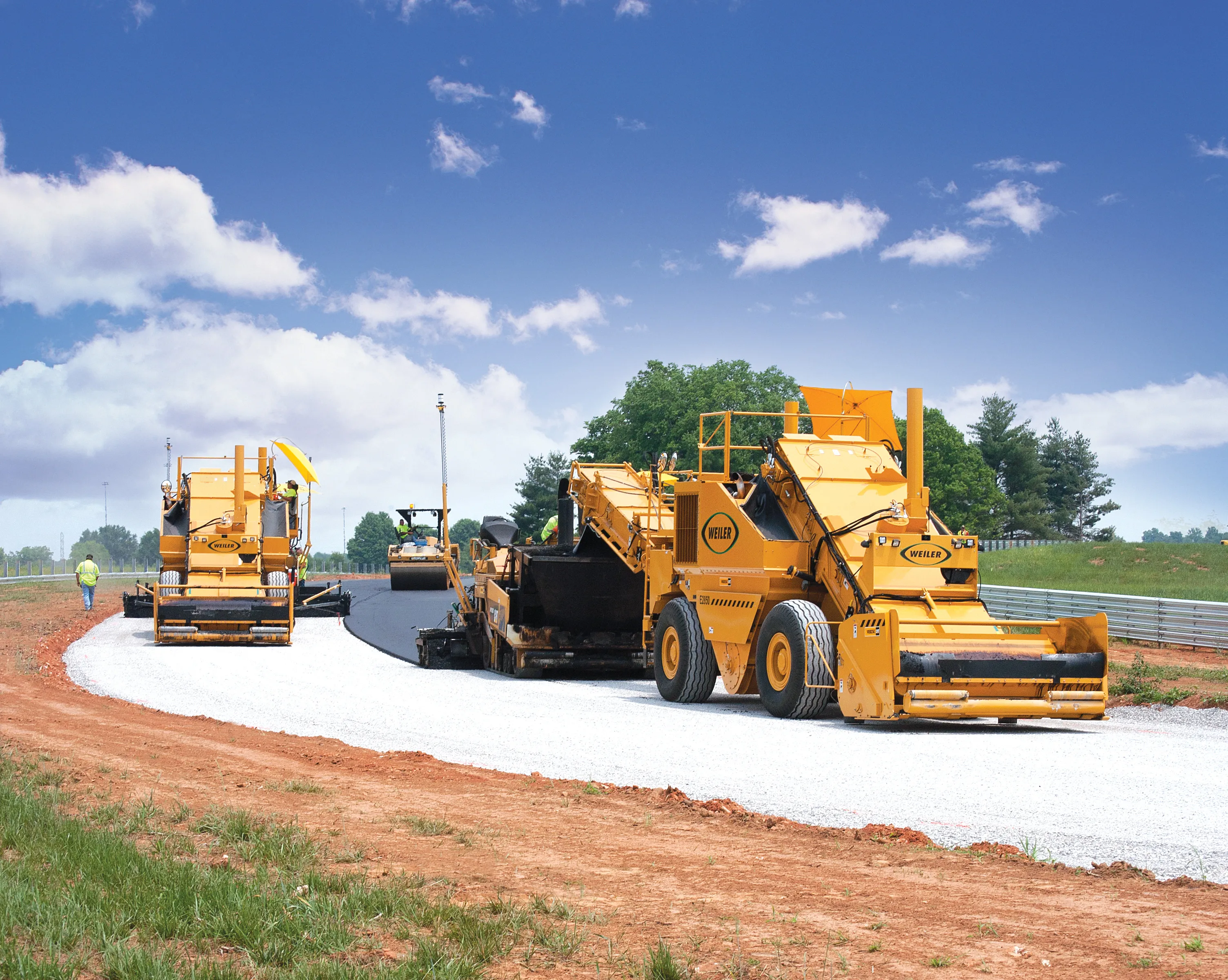
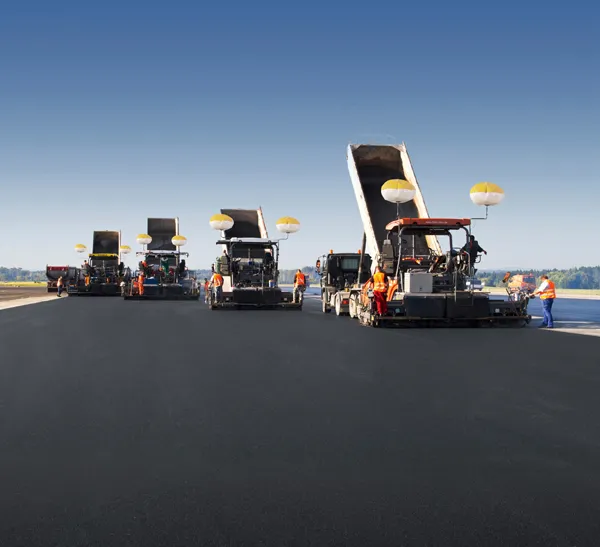
Paving the asphalt layers was carried out using three Vögele SUPER 1800-3i machines, each of which worked with an MT 3000-2i Offset PowerFeeder. The mobile feeders helped to deliver the required paving performance and quality by eliminating the need for transferring material to the pavers from trucks. The mobile feeder operators concentrated on the material feed, leaving the paver operators to focus on the paving process.
The pavers worked in echelon formation, laying the surface in a hot-to-hot fashion to provide a continuous surface across the width of the track. To further ensure the quality of the surface, Tarmac continuously checked whether the paving was carried out within the correct temperature limits. To enable this, all three pavers were equipped with RoadScan, Vögele’s non-contacting temperature measurement system.
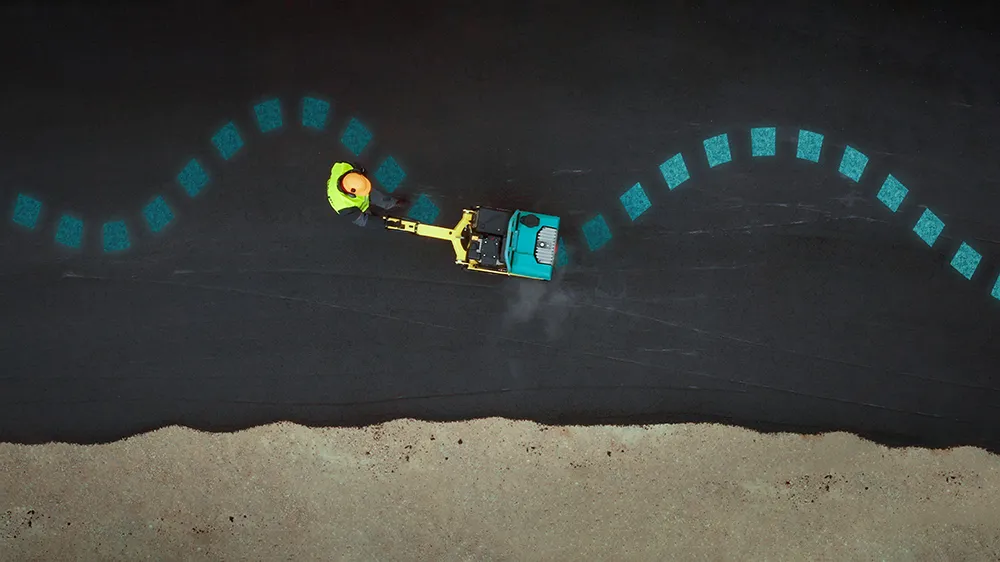
The sophisticated Hamm rollers used technology to deliver optimum compaction of the 30mm binder course and 40mm surface. Using the advanced Hamm compaction quality (HCQ) system, the HD+ and DV+ series rollers provided intelligent compaction.
The combination of quality machines and 3D model allowed the contractor to achieve full compliance with the stipulated asphalt surface grip characteristic (roughness) of 0.28, according to the International Roughness Index (IRI).