In the middle of central Texas lies Blanco County, which is in the state’s Hill Country. West of Austin and north of San Antonio, the county is traversed by the Blanco River and the Pedernales River, and two major highways, US Highway 290 and US Highway 281. Because of the proximity to two major cities, the highways carry heavy traffic volumes and US 281 in particular was in need of repair.

In the middle of central Texas lies Blanco County, which is in the state’s Hill Country. West of Austin and north of San Antonio, the county is traversed by the Blanco River and the Pedernales River, and two major highways, US Highway 290 and US Highway 281. Because of the proximity to two major cities, the highways carry heavy traffic volumes and US 281 in particular was in need of repair.
The3499 Texas Department of Transportation (TxDOT) identified a 25km stretch of US Highway 281 for maintenance, a section connecting Marble Falls and Johnson City and carrying approximately 9,000 vehicles/day. It also serves as a north-south connection between San Antonio and Lampasas.
The project section of highway had last received a seal coat surface treatment in 2002. There was a substantial amount of cracking in the existing pavement surface. TxDOT determined that it was time to perform preventative maintenance on US 281 before moisture could get into the base material and cause further damage, requiring more extensive rehabilitation work.
Clark Construction, based in San Antonio, Texas won the bid for repairing and resurfacing the highway section in Blanco County. The first task the company did was to run a profilograph along the stretch to measure the pavement surface roughness. This showed that the profile index was in the 80s and 90s, confirming the road was in bad shape and needed resurfacing.
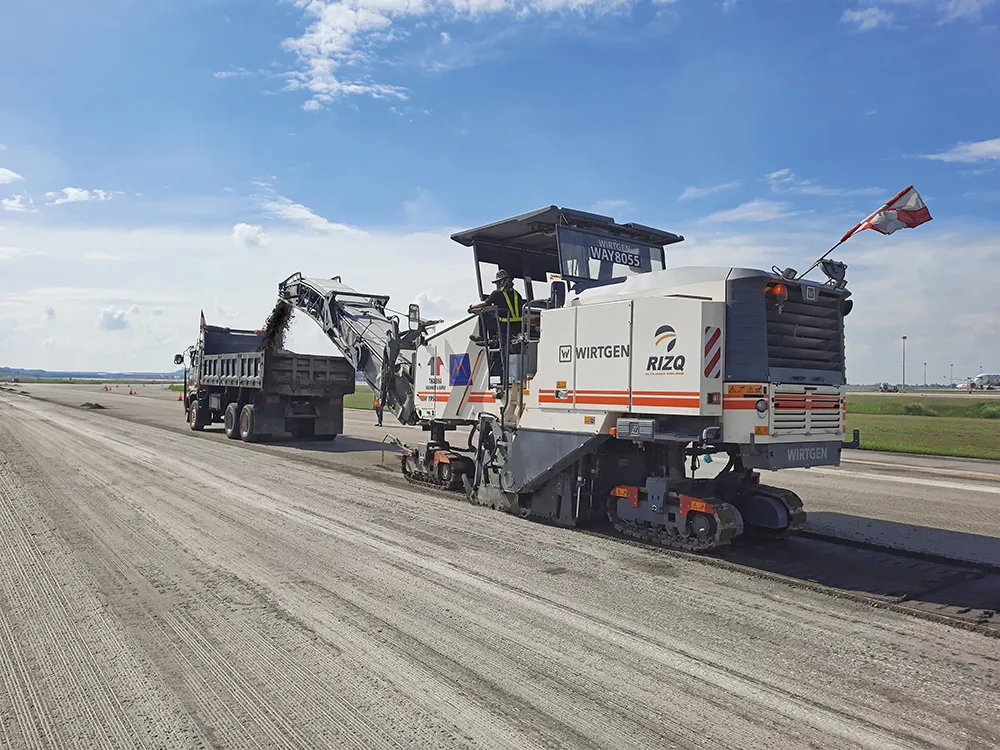
The timetable was tight though, giving the company two months to mill and resurface the road with hot mix asphalt. And rain delayed the project early on, which increased the firm’s need for efficiency. Clark Construction used two milling machines to remove the highway’s rough surface. The firm used a1252 Roadtec RX-700 milling machine from its fleet and acquired a new Roadtec RX-600e milling machine.
The RX-700 features a three-track assembly and the RX-600e has a four-track assembly. Both cold planers feature 60° conveyor swing to easily feed a truck and 356mm augers. The firm milled the surface to a depth of 51mm, with Vulcan Materials then recycling the milled material into the asphalt used to repave the roadway. The company used two power brooms and a vacuum truck to clean the milled surface before paving began.
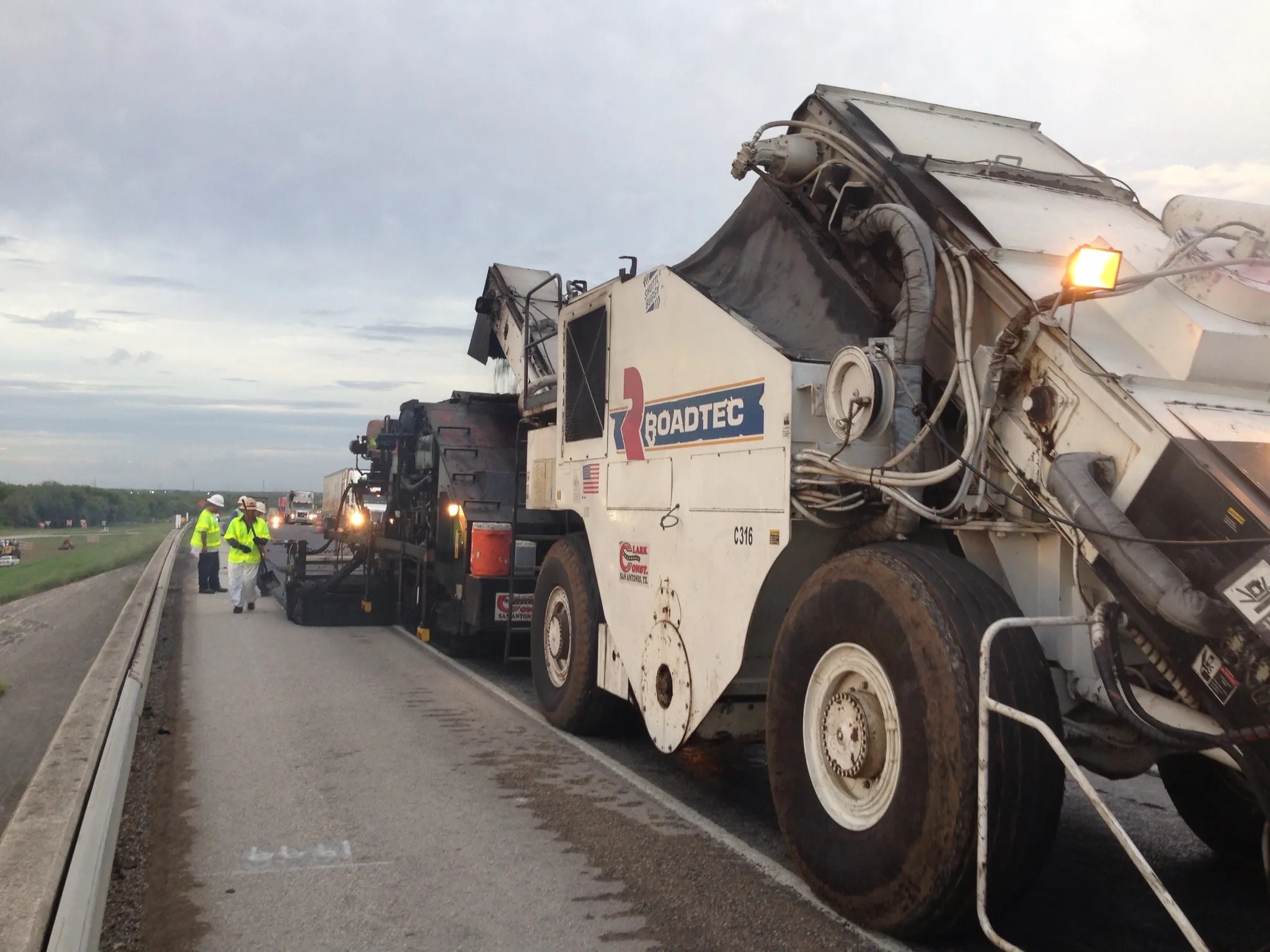
To ensure that Clark Construction could efficiently place the 51mm of new asphalt and meet the TxDOT smoothness and rideability specs the company used its new Roadtec SP-200 spray paver. The ride specs were to meet TxDOT surface test type B schedule 3 for smoothness of ride. Additionally, the contractor had to meet density requirements for the material placed.
Differing from a conventional paver, the machine sprays a tack coat seconds before laying the asphalt mix. The tack coat is designed to ensure a good bond to the existing pavement. A powerful heater heats the liquid tack in the paver’s 5,438litre tank before the paving operation begins. Liquid oil continuously circulates through the system, and an onboard microprocessor Controls the rate of flow to the spray bar. The spray bars extend as needed with the screed and each nozzle can be manually shut off for partial passes.
The Roadtec SP-200 features a gravity-fed asphalt mix hopper, while its spreading augers deliver the mix to the Eagle 10 hydraulically extendable, vibrating screed. Once the 25km stretch of US Highway 281 was completed, Clark Construction ran another profilograph to measure the pavement surface. The second profilograph confirmed they had achieved the results intended—a measurement of 30.
The
The project section of highway had last received a seal coat surface treatment in 2002. There was a substantial amount of cracking in the existing pavement surface. TxDOT determined that it was time to perform preventative maintenance on US 281 before moisture could get into the base material and cause further damage, requiring more extensive rehabilitation work.
Clark Construction, based in San Antonio, Texas won the bid for repairing and resurfacing the highway section in Blanco County. The first task the company did was to run a profilograph along the stretch to measure the pavement surface roughness. This showed that the profile index was in the 80s and 90s, confirming the road was in bad shape and needed resurfacing.
The timetable was tight though, giving the company two months to mill and resurface the road with hot mix asphalt. And rain delayed the project early on, which increased the firm’s need for efficiency. Clark Construction used two milling machines to remove the highway’s rough surface. The firm used a
The RX-700 features a three-track assembly and the RX-600e has a four-track assembly. Both cold planers feature 60° conveyor swing to easily feed a truck and 356mm augers. The firm milled the surface to a depth of 51mm, with Vulcan Materials then recycling the milled material into the asphalt used to repave the roadway. The company used two power brooms and a vacuum truck to clean the milled surface before paving began.
To ensure that Clark Construction could efficiently place the 51mm of new asphalt and meet the TxDOT smoothness and rideability specs the company used its new Roadtec SP-200 spray paver. The ride specs were to meet TxDOT surface test type B schedule 3 for smoothness of ride. Additionally, the contractor had to meet density requirements for the material placed.
Differing from a conventional paver, the machine sprays a tack coat seconds before laying the asphalt mix. The tack coat is designed to ensure a good bond to the existing pavement. A powerful heater heats the liquid tack in the paver’s 5,438litre tank before the paving operation begins. Liquid oil continuously circulates through the system, and an onboard microprocessor Controls the rate of flow to the spray bar. The spray bars extend as needed with the screed and each nozzle can be manually shut off for partial passes.
The Roadtec SP-200 features a gravity-fed asphalt mix hopper, while its spreading augers deliver the mix to the Eagle 10 hydraulically extendable, vibrating screed. Once the 25km stretch of US Highway 281 was completed, Clark Construction ran another profilograph to measure the pavement surface. The second profilograph confirmed they had achieved the results intended—a measurement of 30.