Meeting the challenge of desert runway resurfacing

Ferocious daytime temperatures can provide a tough challenge to construction firms working in desert conditions in Egypt's south. Despite the high daytime temperatures however, Egyptian contractor Orascom has managed to complete an airport project on budget and ahead of schedule, while meeting the client's tight specifications. The firm has just completed the project to revamp Suhag Airport in the south of the country. This airport now features a new runway, taxiways and aircraft hard standing, as well as n
April 13, 2012 Read time: 3 mins
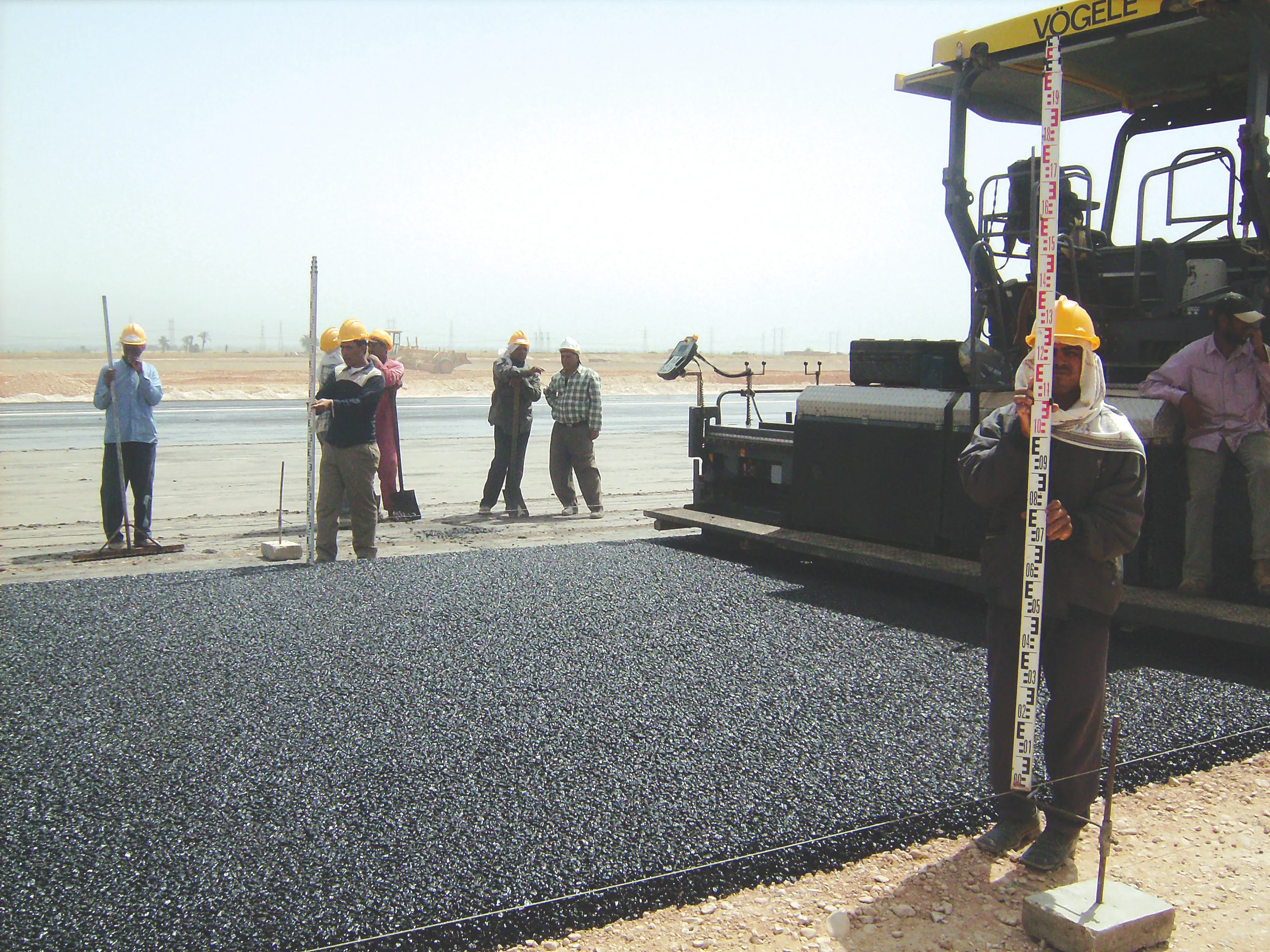
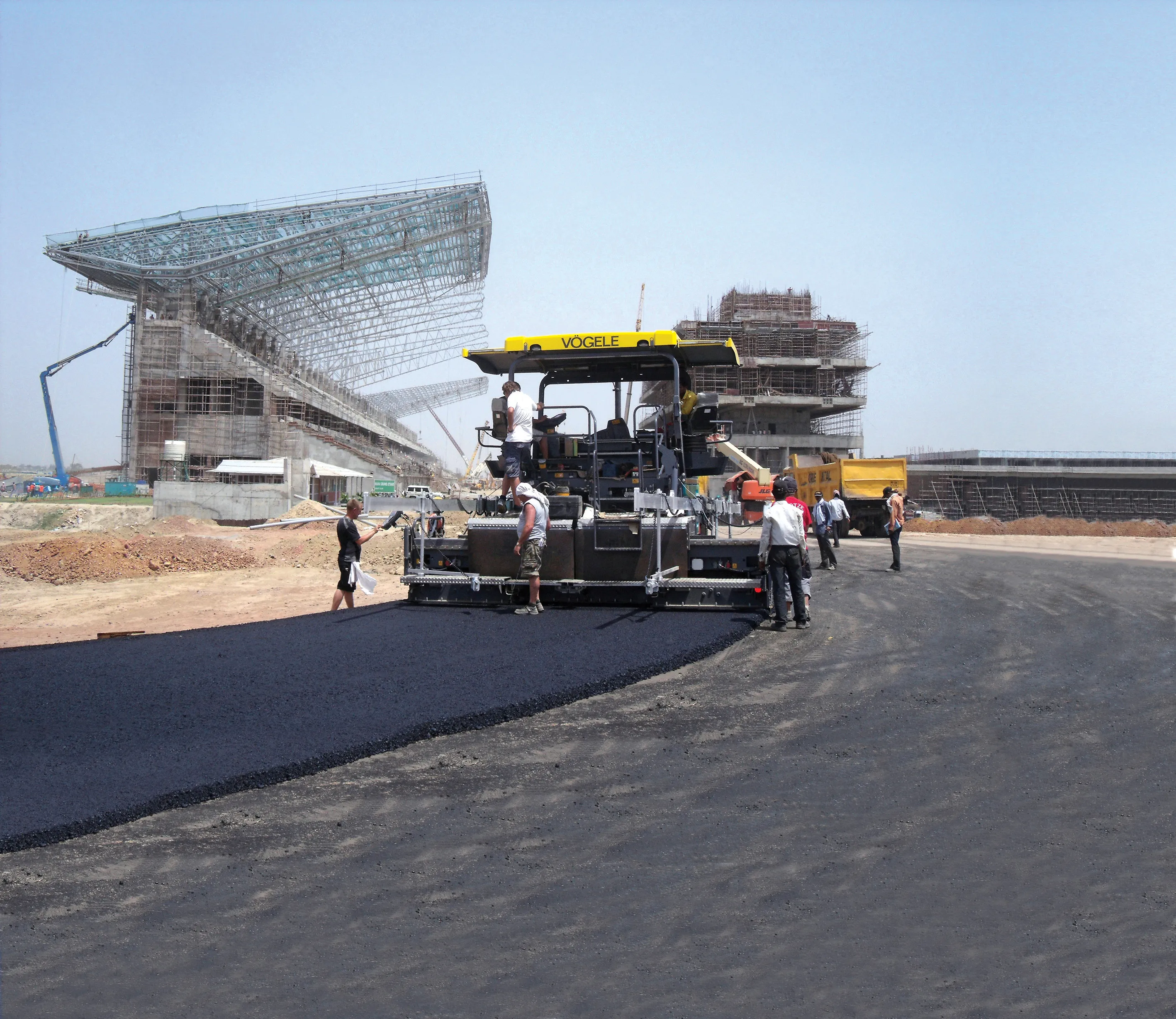
For the asphalt paving duties at the airport Orascom used two Vögele Super 1800-2 finishers working together

Ferocious daytime temperatures can provide a tough challenge to construction firms working in desert conditions in Egypt's south.

Despite the high daytime temperatures however, Egyptian contractor 2414 Orascom has managed to complete an airport project on budget and ahead of schedule, while meeting the client's tight specifications. The firm has just completed the project to revamp Suhag Airport in the south of the country. This airport now features a new runway, taxiways and aircraft hard standing, as well as new perimeter and access roads. Orascom carried out all of this work for its client, the Egyptian Army, which will operate the facility as a joint civil/military airport.

Because the operation has employed an all new fleet of machines combined with the latest construction techniques and tight control of specifications, both structural and finish quality are high. According to one of the project team at Orascom, "This is one of the best runways in Egypt." The one year project to rebuild the runway started at the end of 2008 and took one year to complete, with the perimeter road, taxiways and concrete hard standing having all just been completed in May of this year.

In all Orascom says it paved around 34km of roads at the site, including the perimeter road around the airport. The runway itself measures 3km long by 70m wide while there are three taxiways of 400m each and two concrete aircraft parking aprons measuring 37,900m2 for military aircraft and 40,000m2 for civil aircraft.

The runway features three layers of asphalt, a wearing course, binder course and base course. Under this are two layers of compacted soil and aggregates, built to tight specifications to meet Egyptian requirements and regulations. The aircraft parking areas are made of high quality concrete and were laid in two layers, each 150mm thick and with a 700mm structure of earth and aggregate underneath. After laying the concrete was cut with slots every 5m and these were then filled with sealant.

In all nine 178 Caterpillar 14M graders were employed to lay out the site and also carry out the majority of the earthmoving duties. Egyptian practice is to make extensive use of graders for earthmoving, so these were key prduction tools. For the surfacing two Vögele Super 1800-2 pavers were used to lay the asphalt while the concrete paving for the aircraft parking areas was carried out with a 2395 Wirtgen SP1500.

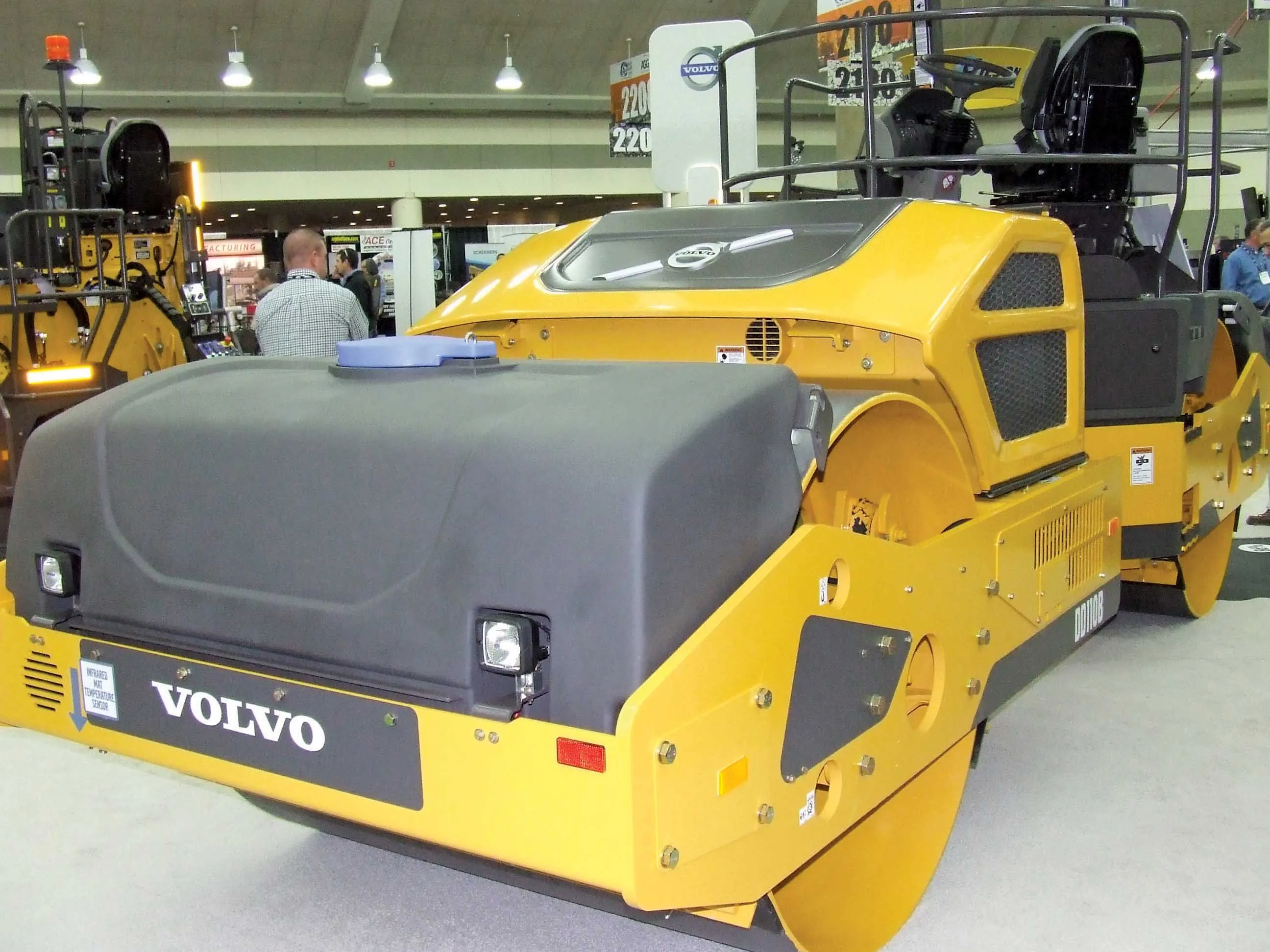
In addition, 14 single drum soil rollers and twin drum asphalt rollers of various makes were used for compaction of the earth and asphalt surfaces. A 273 Marini Ultima batching plant able to deliver 120tonnes/hour produced the asphalt used on the runway and roadways around the airport, with the high specification concrete coming from an outside supplier.

Because the asphalt and concrete paving work had to be carried out to high specifications, total stations were used to monitor progress throughout and a tolerance of +/- 2mm was allowed on the concrete surface for instance. The concrete paving job was only carried out at night to save the crew from working with the material during the fierce daytime temperatures that can hit peaks of 45ºC.

Orascom had to build five concrete culverts along the length of the runway as well as two for each of the taxiways although these are all for electrical cabling rather than drainage, as rainfall in these desert conditions is a rare event. The new airport is now open to traffic and also benefits from a brand new control tower and terminal building, as well as other new facilities.
For more information on companies in this article

Related Content

  • Smart compaction at new airport project
    February 7, 2017
    A new airport project is benefiting from some of the latest developments in compaction technology Work started on a new airport for Istanbul in June 2014, with the facility set to be one of the world's largest and to set new standards when it opens for business. BOMAG has been playing a key role in the construction work at the new site, which is located close to the Black Sea coast. The construction equipment company has worked closely with the engineering team on site and BOMAG machines are now carr
  • In the fast lane at Indian F1 track
    June 21, 2012
    India’s new Formula 1 motor racing circuit, with its tight construction tolerances, demands considerable driving skill. More than 500 million people worldwide watched the first Formula 1 motor race in India's history. The drivers were thrilled by the new asphalt circuit with its numerous bends and the peripheral area around the new race track at Greater Noida near the capital New Delhi, which were built by machinery from German company Vögele (a member of the Wirtgen Group). Working with four Super 1800-
  • Smarter compaction equipment from key manufacturers
    June 23, 2015
    Intelligent compaction technologies continue to advance in sophistication - Mike Woof writes Ever more sophisticated intelligent compaction technologies are being offered to customers, which can boost working efficiency and help improve construction quality. This is particularly the case for the compaction of asphalt running surfaces. Asphalt cooling leaves only a short time window during which a paved mat can be properly compacted, so intelligent compaction systems offer major gains for contractors and cli
  • Developments in concrete road construction
    February 7, 2012
    Innovative developments are pushing forward concrete road construction techniques. The concrete road sector looks to benefit from some key innovations and developments now coming to market or being employed in different territories. Irregular weather and environmental conditions can alter the rate at which concrete cures, with a risk of plastic shrinkage cracks that can compromise the integrity of a pavement. Contractors cannot control the environmental conditions of a paving project and when weather patter