Research in the US has shown that using Intelligent Compaction (IC) for quality control purposes can lead to longer-lasting pavements and therefore lower whole life costs. Now the major roller manufacturers are investing heavily in developing new technologies that will meet emerging specifications in the States.
“It may take five to ten years but I think that IC will be widely used for both soils, aggregate base and asphalt pavement materials in the US,” said Bob Horan, senior regional engineer at the Asph


Research in the US has shown that using Intelligent Compaction (IC) for quality control purposes can lead to longer-lasting pavements and therefore lower whole life costs. Now the major roller manufacturers are investing heavily in developing new technologies that will meet emerging specifications in the States.
“It may take five to ten years but I think that IC will be widely used for both soils, aggregate base and asphalt pavement materials in the US,” said Bob Horan, senior regional engineer at the Asphalt Institute. “All of the major roller suppliers already have or are rapidly developing IC technology, which tells me that they think it will be widely accepted in the future.”
Horan, with George Chan and Qinwu Xu of the5943 Transtec Group and Victor Gallivan of the 2410 Federal Highway Administration, published a paper in March this year that details how IC can improve the quality control of hot rolled asphalt. The main benefits they identify were: it produces a more uniform density of pavement; it identifies soft spots in underlying materials; and it provides 100% real-time coverage – rather than spot tests from samples taken after the pavement has been laid.
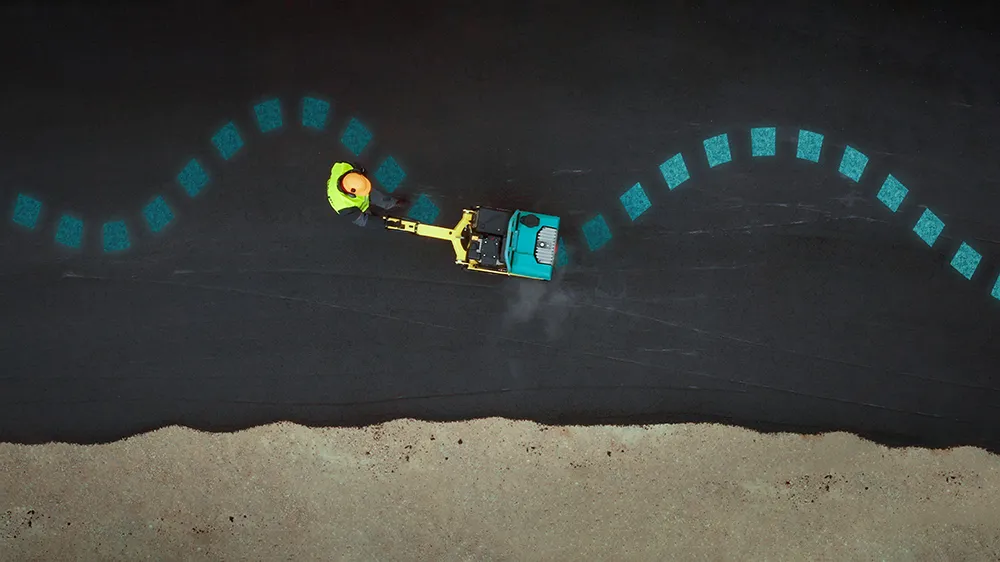
An IC roller is a vibratory roller that measures the stiffness of the material it is compacting as it rolls, adjusting itself as required to compact the material more or less. They have been used for soil compaction in Europe and Japan for years but in the US the Federal Highway Authority has set down a definition of what an IC roller is. Currently only three manufacturers machines meet those criteria.
The measurement methodologies and terminologies still vary from supplier to supplier, with the generic term being Intelligent Compaction Measurement Value (ICMV). But Horan believes that there will be moves to standardise the ICMVs.
The paper by Horan and others comes out of a three-year research programme called the Intelligent Compaction Pooled Fund (ICPF), which was completed in July of last year. The ICPF found that while the ICMV values for granular soil and aggregate base materials correlated reasonably well with density values, those for cohesive soils and asphalt did not.
“In order for IC to be used for QA (acceptance) testing, a good correlation between ICMV and density must be established,” said Horan. “It is likely that QA will come sooner for granular soils and aggregate base materials.”
The next step will be to run demonstration projects where IC is used for Quality Control purposes. “Many agencies are discussing setting up one or two 'pilot' projects where contractors are required to use IC technology for QC purposes,” said Horan. “Much will be learned about how to move forward with implementation on those projects”.
“It may take five to ten years but I think that IC will be widely used for both soils, aggregate base and asphalt pavement materials in the US,” said Bob Horan, senior regional engineer at the Asphalt Institute. “All of the major roller suppliers already have or are rapidly developing IC technology, which tells me that they think it will be widely accepted in the future.”
Horan, with George Chan and Qinwu Xu of the
An IC roller is a vibratory roller that measures the stiffness of the material it is compacting as it rolls, adjusting itself as required to compact the material more or less. They have been used for soil compaction in Europe and Japan for years but in the US the Federal Highway Authority has set down a definition of what an IC roller is. Currently only three manufacturers machines meet those criteria.
The measurement methodologies and terminologies still vary from supplier to supplier, with the generic term being Intelligent Compaction Measurement Value (ICMV). But Horan believes that there will be moves to standardise the ICMVs.
The paper by Horan and others comes out of a three-year research programme called the Intelligent Compaction Pooled Fund (ICPF), which was completed in July of last year. The ICPF found that while the ICMV values for granular soil and aggregate base materials correlated reasonably well with density values, those for cohesive soils and asphalt did not.
“In order for IC to be used for QA (acceptance) testing, a good correlation between ICMV and density must be established,” said Horan. “It is likely that QA will come sooner for granular soils and aggregate base materials.”
The next step will be to run demonstration projects where IC is used for Quality Control purposes. “Many agencies are discussing setting up one or two 'pilot' projects where contractors are required to use IC technology for QC purposes,” said Horan. “Much will be learned about how to move forward with implementation on those projects”.
- TRB Paper Number: 12-0916 “Implementing Quality Control of Hot Mix Asphalt Paving Using Intelligent Compaction Technology”
- FHWA/Transportation Pooled Fund (TPF) No. 954 “Accelerated Implementation of Intelligent Compaction Technology for Embankment Subgrade Soils, Aggregate Base, and Asphalt Pavement Materials”