Taking centre stage on the LiuGong stand at BICES was the new 970E, the largest excavator the firm has ever made. Following soon after the launch of the firm’s 50tonner, this new 70tonne class machine shares various design features with the rest of the recently developed E Series.

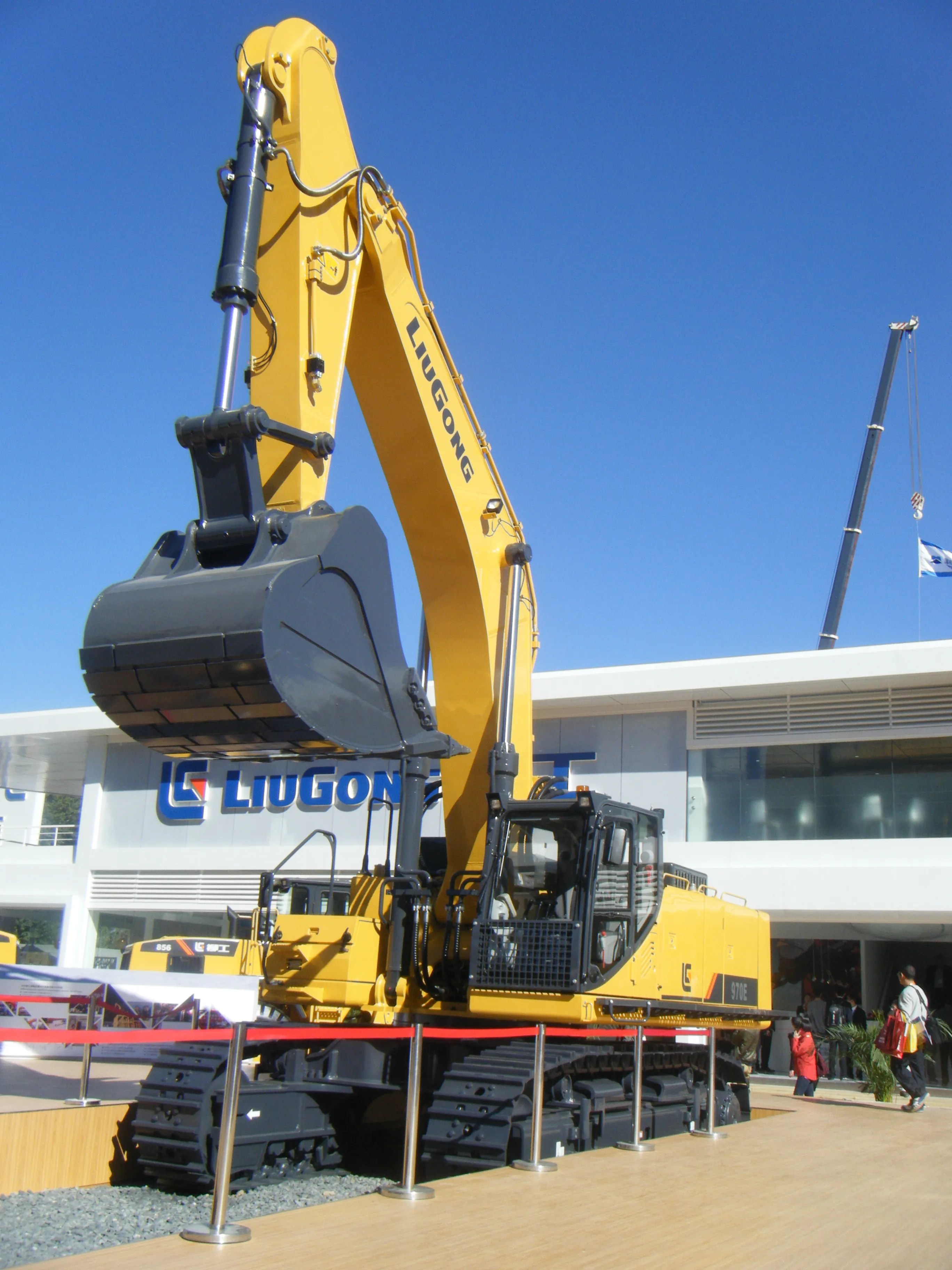
Taking centre stage on the 269 LiuGong stand at 2730 BICES was the new 970E, the largest excavator the firm has ever made. Following soon after the launch of the firm’s 50tonner, this new 70tonne class machine shares various design features with the rest of the recently developed E Series.
Power comes from a196 Cummins QSX15 diesel while the machine features 2617 Kawasaki hydraulic components. The combination of this high performance engine and high quality hydraulics is said to ensure efficiency and productivity, as well as reliability. Designed as a heavy duty machine for tough quarry applications, the excavator has been developed with a rugged undercarriage and carbody. Finite element analysis and extensive strain testing were used in the development process to ensure structural rigidity. Maintenance is said to be easy while centralised greasing helps ensure component wear life is maximised.
This is a key model introduction for LiuGong, which has also recently extended its partnerships with Cummins and ZF in China. The company is also keen to emphasise its strong financial situation, with a much lower debt ratio than many of its Chinese competitors. The phased introduction of the E Series excavators has culminated with this top-of-the-line 70tonner, which also highlights the firm’s improvements in product quality. Further high performance machines are planned and the company aims to introduce the first of a new wheeled loader range in 2014, which will share some of the technological benefits of the E Series excavators. Other new models in development at present include additional haul trucks and road construction machines, although more details as to their projected launch dates are not currently available.
Power comes from a
This is a key model introduction for LiuGong, which has also recently extended its partnerships with Cummins and ZF in China. The company is also keen to emphasise its strong financial situation, with a much lower debt ratio than many of its Chinese competitors. The phased introduction of the E Series excavators has culminated with this top-of-the-line 70tonner, which also highlights the firm’s improvements in product quality. Further high performance machines are planned and the company aims to introduce the first of a new wheeled loader range in 2014, which will share some of the technological benefits of the E Series excavators. Other new models in development at present include additional haul trucks and road construction machines, although more details as to their projected launch dates are not currently available.