

Teledyne FLIR says that it has recently installed its weather-proof dual thermal AID camera technology for use on the new 1915 Çanakkale Bridge in Turkey.
The bridge crosses the Çanakkale Strait that connects the Sea of Marmara and the Aegean Sea in western Turkey. It was constructed in a joint venture between DL E&C (formerly Daelim), Limak, SK Ecoplant and Yapı Merkezi.
Teledyne FLIR’s incident detection cameras now cover the entire length of the six-lane 4.6km bridge, the longest mid-span suspension bridge in the world and part of the Malkara-Çanakkale Motorway.
The bridge’s operators need to see clearly in all weather conditions, from fog to heavy rain. Another challenge is sun glare which can distort images generated by a visual camera-based automatic incident detection system. Thermal cameras have no issues with fog, bad weather or sun glare since they detect traffic based on heat and not light.
“Winters can be hard in Çanakkale and Malkara, with snow, fog and heavy wind,” said Emrah Ilteray, chairman of Elmak-YMIdis, the joint venture responsible for the ITS part of the project. “The 1915 Çanakkale Bridge is a high-profile project with international impact. That is we did not compromise on the quality of our incident detection technology. FLIR’s Dual AID camera ticks all the boxes in terms of detection performance and accuracy.”
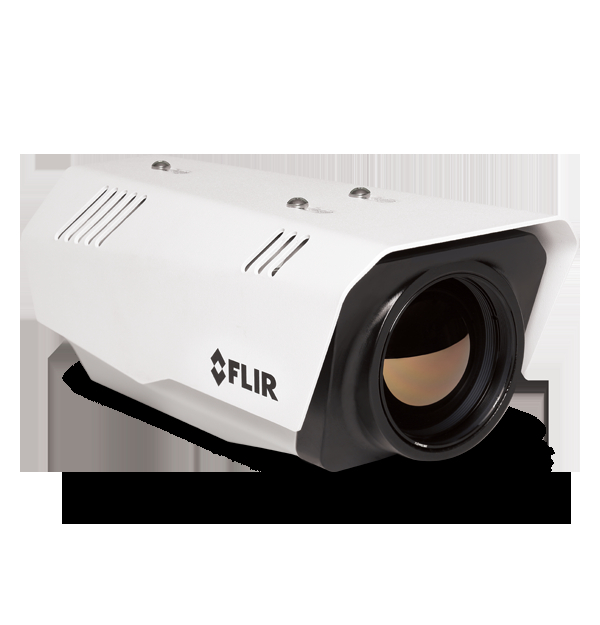
Nearly 100 of Teledyne FLIR’s ITS-632 Dual AID cameras are installed every 96m on each side of the deck. The camera combines thermal and visual imaging technology with advanced video analytics to reliably detect incidents—including collisions, stopped vehicles, wrong-way drivers and pedestrians. It also detects fires within seconds of ignition and provides valuable traffic data, including number of vehicles and vehicle classes.
In addition to the incident detection cameras, Teledyne FLIR also delivered eight of its FLIR Elara DX-Series multi-spectral pan/tilt/zoom (PTZ) security cameras. They offer control room operators extra means to monitor the bridge for incidents.
One of the strengths of Teledyne FLIR’s dual series AID cameras is that they have their video analytics embedded within the camera. Since the camera takes care of all the video analytics processing, the video stream does not need to be sent over the network to a central processing server. This significantly reduces network traffic and results in much lower latency.
In case the network should go down, the camera still stores its incident events. Another benefit of such a distributed architecture is that in the rare case an AID camera should go down, the rest of the network and camera infrastructure are not affected.
Information from the 98 AID cameras and eight security cameras is collected and managed by FLIR’s Flux video detection management system. Control room operators use this software to overview traffic data, events, alarms and video images generated by the various cameras. Flux provides a user-friendly interface composed of a monitoring and a reporting application and enables real-time monitoring of events and alarms.