Inner Mongolia duty for the Tertu T40

French barrier manufacturer Tertu reports that progress continues on the installation of hundreds of kilometres of its T40 guardrail along China’s Inner Mongolia Highway G302.
November 11, 2020 Read time: 2 mins
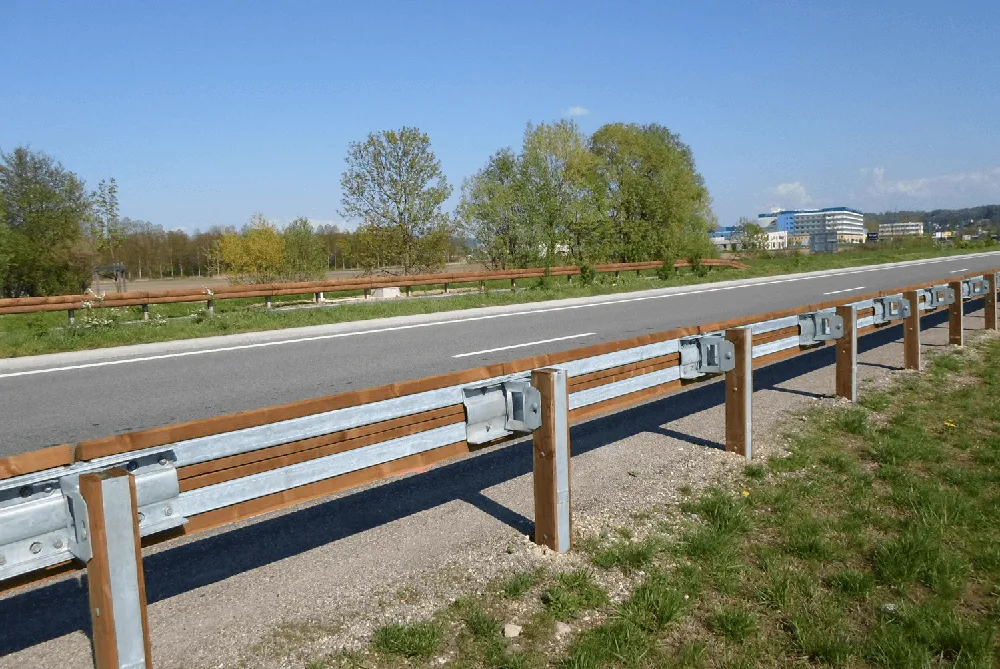
The T40 system consists of two half-logs reinforced at the back with a steel U-channel

Worked started in China in July last year. The T40 steel-backed timber guardrail deal is Tertu’s most important project in the country, being led by the company’s subsidiary Tertu Shanghai Traffic Technologies, founded in 2010.

The T40 guardrail was introduced along Chinese roads after testing in 2018 when it became the first European steel-backed timber safety barrier to be certified to Chinese standard JTG B05-01 -2013 (level A). The guardrail stood up to a 10tonne Chinese bus during certification tests at the Beijing Shenhuada laboratory.

The aesthetically pleasing timber crash barrier offers the same performances as steel or concrete barriers but is more environment friendly, according to the company, based in Villedieu-Lès-Bailleul, north-western France.

The barrier system consists of two half-logs 22cm in diameter and either 2m or 4m long, reinforced at the back with a steel U-channel. The rails are mounted on an IPE 140 support with metal spacer. According to EN 1317 standard, the guardrail T40 offers a L2 double containment level N2 for passenger cars and H2 for heavy vehicles.

To comply with Chinese regulations, the guardrail was tested with three vehicle types: a 10tonne bus launched at 60kph, a 10tonne truck, also launched at 60kph, and a 1.5tonne car at 100kph. The T40 is often used in scenic areas to reduce the visual impact of the barrier. Meanwhile, wood treatment ensures that the material offers a long service life to match that of the steel reinforcement.

Tertu said that, apart from France and China, the T40 system has been installed in other countries including Italy, Norway, Ireland, Czech Republic, the British channel island of Jersey, Netherlands, Luxemburg, Belgium, Andorra and Israel.

The current CE certified range offers 12 models, from containment level N1 to H2 covering working widths from W3 to W7.

For more information on companies in this article

Related Content

  • China's economic growth fuelling vehicle increase
    February 21, 2012
    China is at a turning point in many ways. The country's continuing economic growth is fuelling a massive increase in vehicle numbers, with no signs of slackening. This is most acute and most visible in major cities such as Beijing and Shanghai, where traffic jams are now a frequent occurrence
  • Safer cone collection with X-Cone among the latest safety innovations
    August 30, 2017
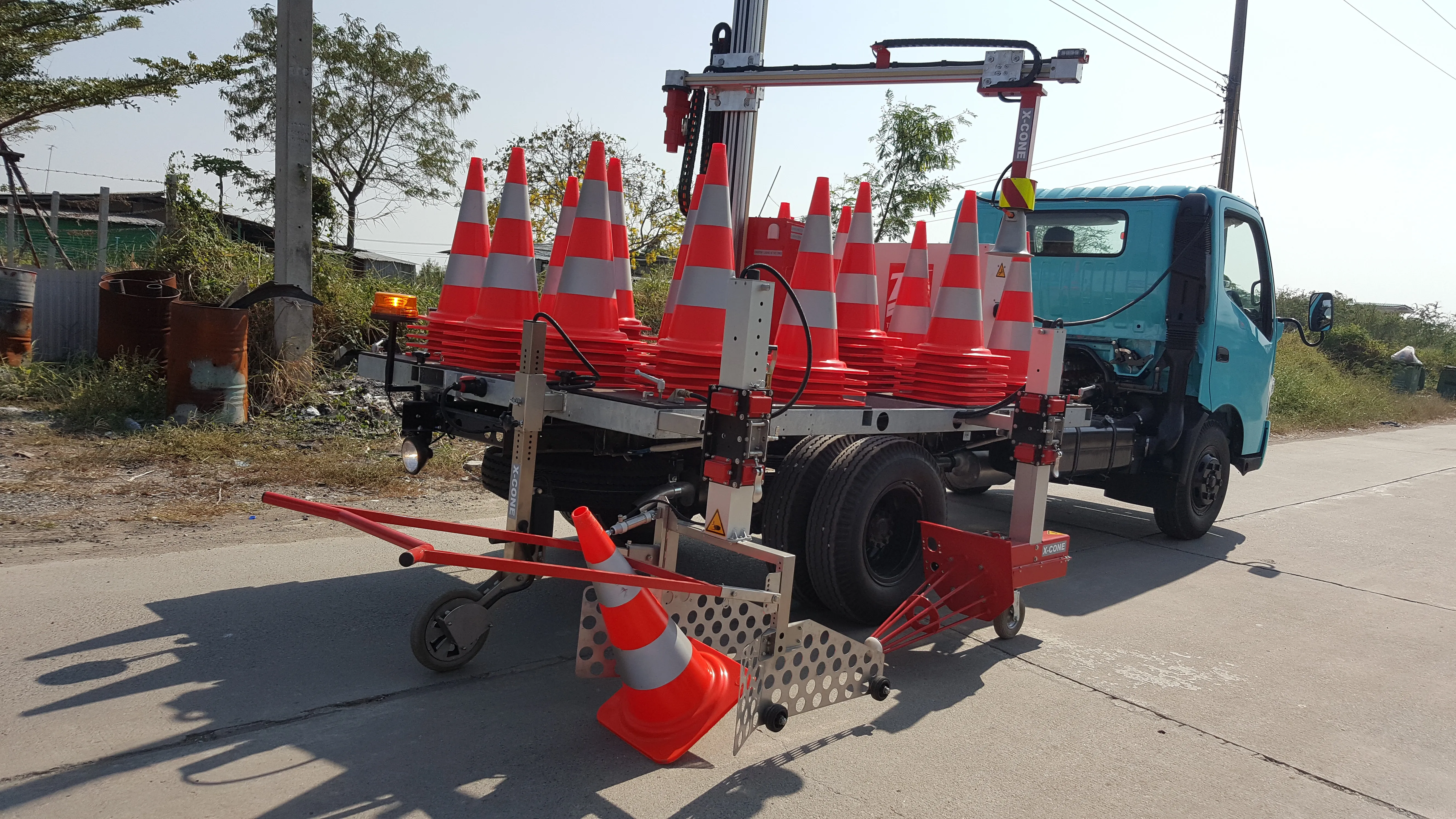
    X-Cone is a new traffic cone management system offering a higher level of safety for workers and maximum efficiency for contractors. Austrian-made X-Cone is a truck-mounted system that can manage the setting out and collection of cones from the flatbed of any 3.5tonne vehicle. It does not matter if the cones are straight or laying on the road, the X-cone can still manage the work quickly, safely and reliably, according to the manufacturer. For setting out standard cones, the driver can decide the distance b
  • Using aspahlt testing equipment improves efficiency
    May 28, 2013
    From density tests on a Mongolian gold mine project to an all-singing, all-dancing asphalt tester, Kristina Smith reports on some of the latest new products in materials testing. Perhaps understandably, nuclear density gauges can present contractors with some order to move them at all. “One of the problems with nuclear soil gauges is the restrictions on movement,” said John Lamond, Manufacturing. “If you are a contractor projects cross-border, it’s a real challenge to move a nuclear density gauge around.”
  • Sunderland’s New Wear Crossing takes shape
    February 16, 2017
    The New Wear Crossing will be the first bridge to be built over the River Wear in Sunderland, UK, for more than 40 years Raising the bridge’s 100m-tall pylon promised to be a stunning visual sight, but also a tricky operation dictated by extremely variable local weather. World Highways went to press just before the operation, but not before the pylon had arrived by barge on January 7. It had completed a two-day crossing of the often unpredictable North Sea from the Belgian port of Ghent where it was f