How will the deep cuts hitting France's national budget affect French roads and highways? Gordon Feller discusses France has one of the most modern transport systems in Europe, the result of decades of public spending on the sector as well as other infrastructure. The government historically has awarded contracts to build infrastructure to French construction and engineering companies, some of which are now among the world's largest contractors. Among other achievements, France's infrastructure programme re

How will the deep cuts hitting France's national budget affect French roads and highways? Gordon Feller discusses
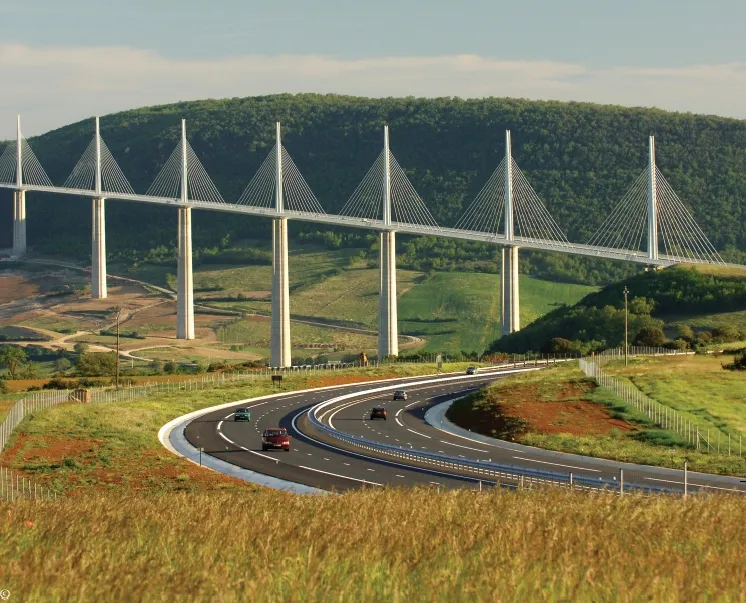
France has one of the most modern transport systems in Europe, the result of decades of public spending on the sector as well as other infrastructure. The government historically has awarded contracts to build infrastructure to French construction and engineering companies, some of which are now among the world's largest contractors. Among other achievements, France's infrastructure programme resulted in the construction of the world's highest road bridge: the Millau Viaduct over the River Tarn, which was completed in 2004 and is more than 300m high, taller than the Eiffel Tower.In the mid-1980s, France began to privatise government-owned companies or assets in transportation, energy, telecommunications, and other sectors to reduce public debt, move infrastructure off government balance sheets, and create more competitive companies. The government requires that public infrastructure be sold to wholly-owned French companies or to joint ventures of French companies and foreign partners in which the French partner has the controlling interest.
The government's sale or partial sale of state-owned companies over the last 20 years has substantially reduced public ownership in France. In 2003, the government created an autonomous agency, the French Government Shareholding Agency, to oversee the management of state enterprises, maximise the value of public companies, provide greater transparency and accountability in government management of state enterprises, and coordinate and facilitate the sale of companies the government has decided to privatise.
In 2005, the government partially privatised France's toll road system by selling its majority stakes in three toll road companies for €12 billion to French and foreign investors. Despite the trend toward privatisation, most of France's airports are owned by city governments. However, some cities are looking at privatising these assets. The government in 2006 completed the partial privatisation of Aéroports de Paris (ADP), the Paris airport operator, by selling shares to the public. The privatisation of the country's regional airports is now in progress, with about a dozen airports expected to be privatised in coming years.
In 2004, the government created the legal framework for public-private partnerships (PPPs). Because the law broadly defines PPPs, it enables the use of different types of PPP structures, depending on how much risk is transferred from the public to the private partner. For example, concessions may be modelled on the UK's Private Finance Initiative (PFI) model.
Already France's emerging PPP market is attracting international interest. As of June 2007, France was reported to have entered into concession agreements for more than 35 PPP projects including schools, highways, bridges, stadiums, high-speed rail, water treatment plants, energy production facilities, and hospitals. Over time, as more concessions are awarded and the government and the private sector become more experienced in the use of PPP, France is expected to evolve into a mature PPP market.
With most of the infrastructure in place to meet France's transportation needs, the government is trying to make more efficient use of its existing roads, airports and other transportation infrastructure rather than building more infrastructures. This is not only because of the rising costs of infrastructure construction but also because of government concerns about the environmental consequences of adding infrastructure.
In addition to upgrading and modernising its existing infrastructure, France also is developing several big green field (new development) infrastructure projects that will require significant financing.
Foreign investors may wish to look for opportunities to form joint ventures with French partners to bid on long-term concessions to build and operate infrastructure in France. ·