TBM built in China for Indian project

A TBM built in China will be used for an Indian project.
By MJ Woof April 29, 2020 Read time: 2 mins
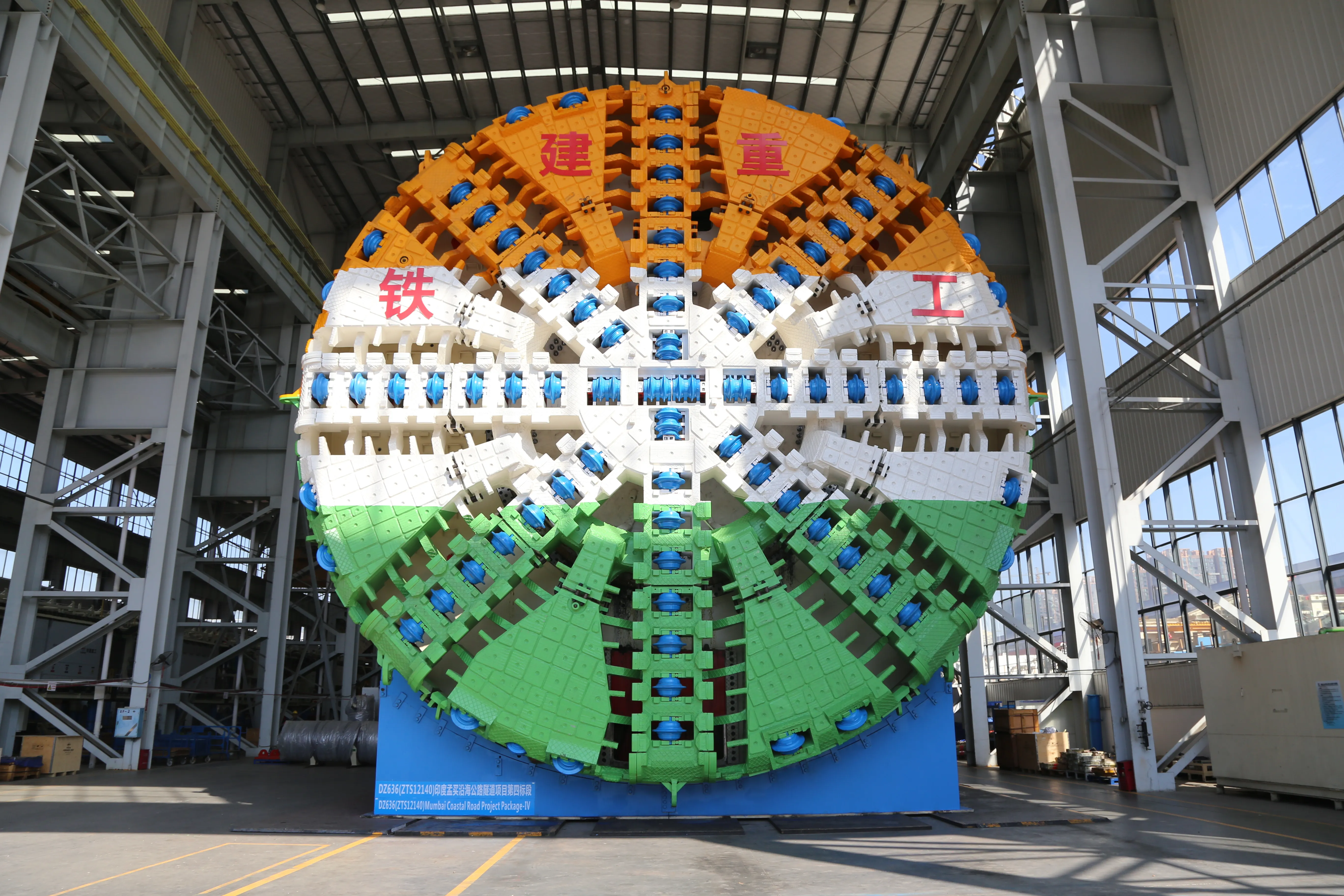
CRCHI is supplying a massive TBM for the Mumbai Coastal Road project in India - image © courtesy of CRCHI

A large diameter tunnel boring machine (TBM) has been built in China for a project in India. Manufacturer CRCHI has constructed the TBM at its main facility in Changsha, China. The TBM will be used to help construct a tunnel stretch for the Mumbai Coastal Road Project.

The TBM will be shipped from Shanghai to Mumbai for the coastal road project. Featuring an excavation diameter of 12.2m, this Slurry TBM is 80m long and weighs 2,300tonnes. It has an installed capacity of 7,280kW and a gradeability of 5%. It will be the largest diameter TBM ever used in India. 

The Mumbai Coastal Road Project is a key project for Mumbai and will measure 29.2km in length. The road will connect Marine drive to Kandivli. The CRCHI Slurry TBM will be used to drive a 1.92km tunnel comprising part of the route.

The tunnel construction work will have to deal with complex geological conditions that require excavation in deep overburden. The tunnel drive will pass through a compound stratum of basalt, breccia and shale, with the maximum uniaxial compressive strength up to 200MPa.

To solve the challenges, CRCHI Slurry TBM is designed with a mixed cutter head with eight spokes and eight panels, which will enable the machine to bore in the complicated strata for a long distance. To solve the problems such as mudcakes forming on the cutterhead and slurry discharge blocking, the TBM is fitted with a big-diameter slurry feeding port and several slurry flushing lines to increase the flow rate of slurry. In addition, 508mm diameter disc cutters are fitted to the TBM to improve machine’s rock breaking capacity and prolong its lifespan.  

In addition, this CRCHI Slurry TBM benefits from innovative features, such as a dual-chamber indirect slurry control system, a dual-circuit automatic pressure system, high-torque and retractable main drive, as well as a high-power slurry circulation system.

This is the 5th TBM supplied by CRCHI for projects in India.
For more information on companies in this article

Related Content

  • Building green with nanotechnology
    June 23, 2021
    The results are out: Iterchimica and Directa Plus’ GiPave combines recycled plastic and nanotechnology to improve pavement performance across the board
  • Building an airport for St Helena
    August 29, 2013
    The remote South Atlantic island of Saint Helena will shortly benefit from the construction of a new airport as well as access roads and supporting infrastructure. This is the biggest construction project in the history of the island, which lies nearly 2,000km off the coast of Africa. The airport is expected to boost economic development for the island’s 4,000 residents with an estimated 20,000 people a year forecasted to visit this highly remote, 122km2 equatorial volcanic outcrop. At present the islan
  • Australian mega link route opens
    November 29, 2012
    Australia’s largest and most complex transport infrastructure project in the city of Brisbane has been officially opened to traffic. The first vehicles have now used the Airport Link, Northern Busway (Windsor to Kedron) and Airport Roundabout Upgrade projects, which together form an extensive US$5.85 billion transport project. The project in Australia’s third most populous city in the state of Queensland comprises a toll road and dedicated busway route, together involving almost 12km of tunnels (described
  • Developments in concrete road construction
    February 7, 2012
    Innovative developments are pushing forward concrete road construction techniques. The concrete road sector looks to benefit from some key innovations and developments now coming to market or being employed in different territories. Irregular weather and environmental conditions can alter the rate at which concrete cures, with a risk of plastic shrinkage cracks that can compromise the integrity of a pavement. Contractors cannot control the environmental conditions of a paving project and when weather patter