Construction activity is underway on a number of key transport infrastructure projects in Colombia. A major bridge project spanning the Magdalena River is currently under construction close to the city of Barranquilla in the north of Colombia. The Pumarejo Bridge was commissioned by Instituto Nacional de Vías (INVIAS) and is being built by a consortium.
Featuring a cable-stayed design, the bridge will be 2.28km in length, with three lanes for vehicles, as well as a pedestrian area and a cycle track in b

Construction activity is underway on a number of key transport infrastructure projects in Colombia
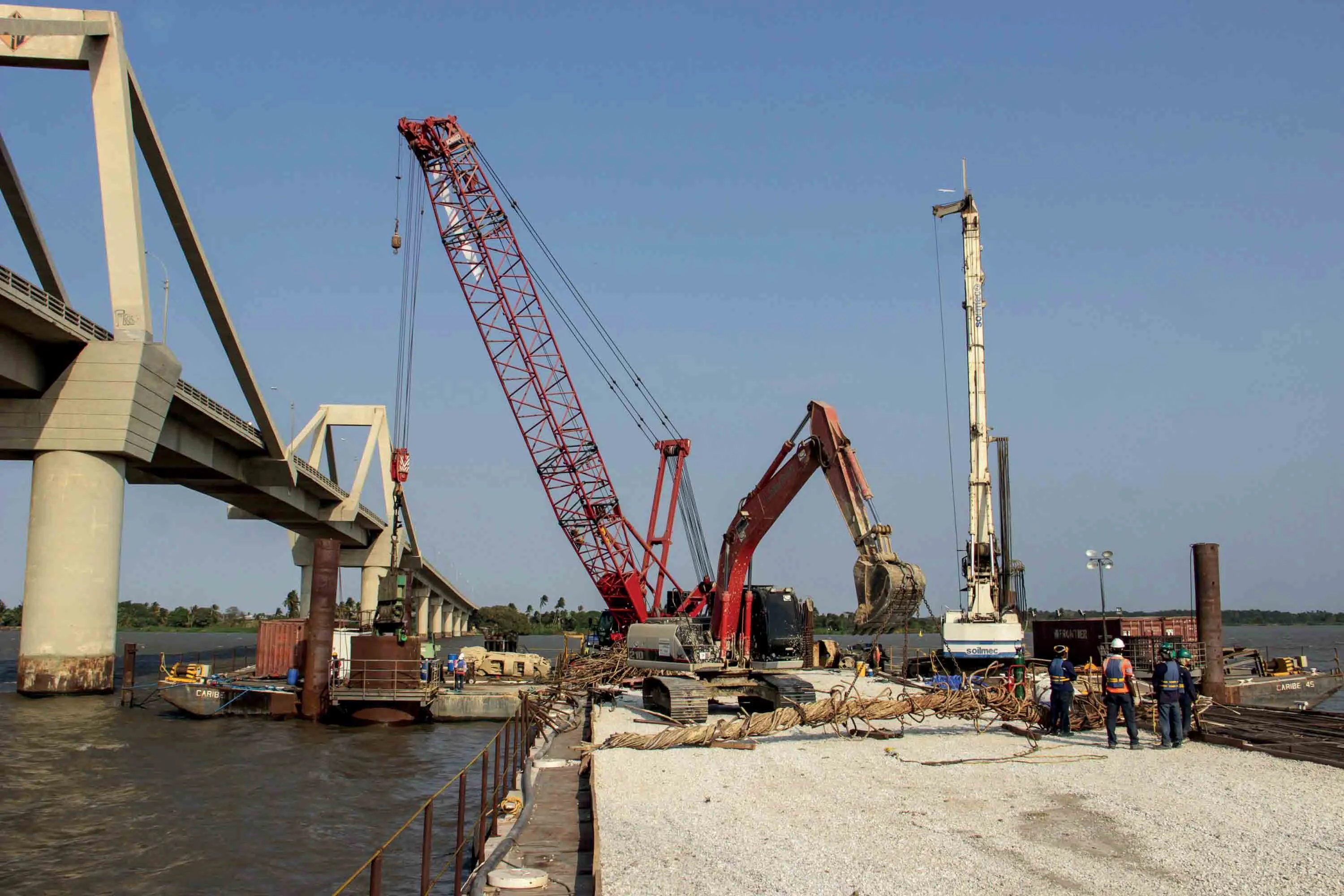
A major bridge project spanning the Magdalena River is currently under construction close to the city of Barranquilla in the north of Colombia. The Pumarejo Bridge was commissioned by Instituto Nacional de Vías (2812 INVIAS) and is being built by a consortium.
Featuring a cable-stayed design, the bridge will be 2.28km in length, with three lanes for vehicles, as well as a pedestrian area and a cycle track in both directions. The navigable central section of the bridge will form an arch 380m long, rising to 45m above the water level at its highest point.
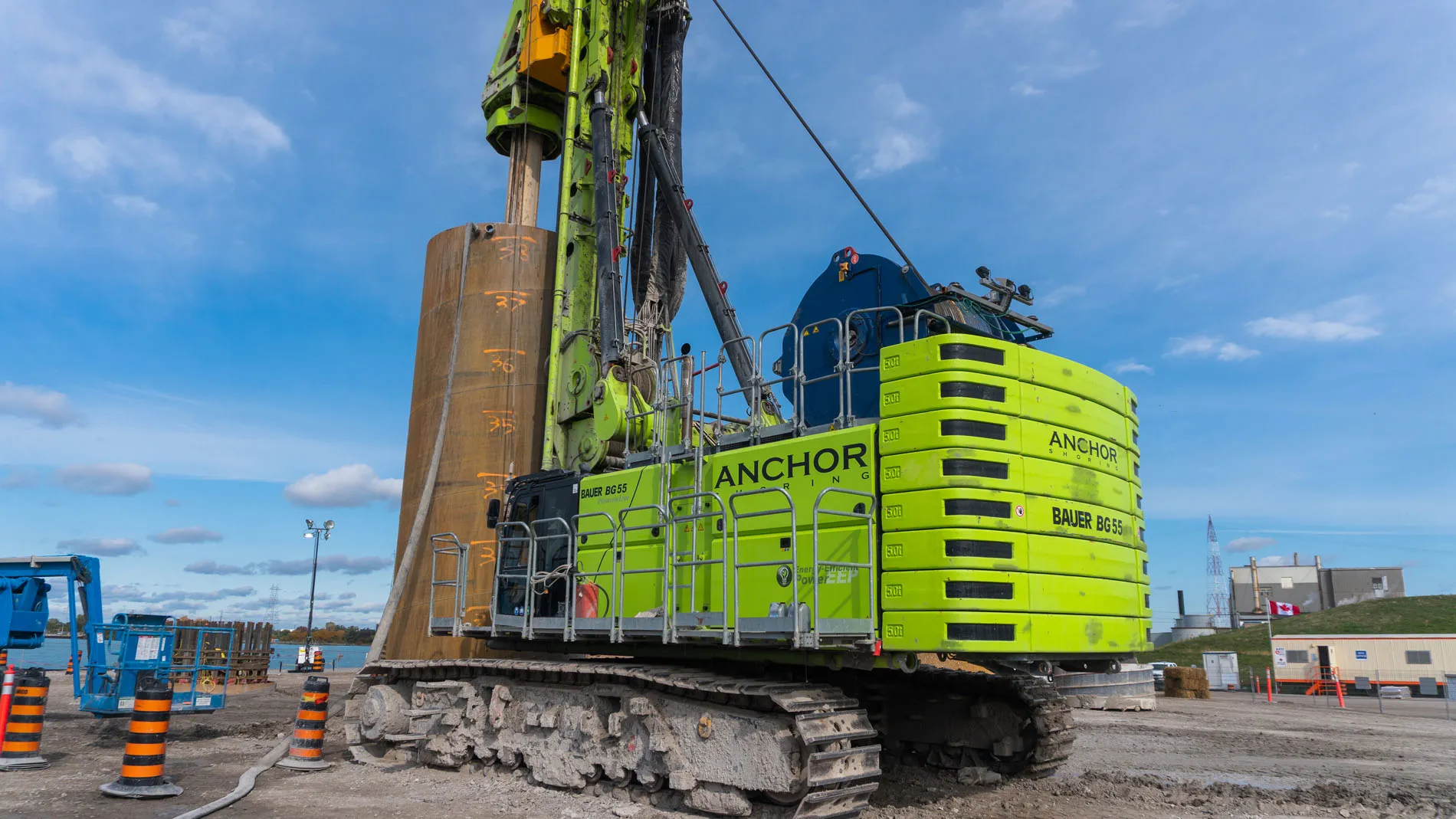
Trevi’s Colombian subsidiary Galante is one of the sub-contractors working on the project for the main contractor Consorcio SES Puente Magdalena Conformado por3959 Sacyr Construcción Colombia SAS, Sacyr Chile y Esgamo Ingenieros Constructores. Galante started work in late 2015 and its job is to drive the bridge support piles both onshore and offshore. The project covers 120 piles on the ground, with diameters ranging from 1.3-2m being driven to depths of around 40m. Meanwhile there are 92 piles in the water with diameters of 2.8m and these are being driven to depths of around 55m. In all this equates to around 35,800m3 of piling works. This is the first time large 2.8m diameter piles will be used on a project in Colombia according to Galante.
Meanwhile infrastructure work is also underway further upstream along the Magdalena River. Another new route is being built that comprises four new roads as well as nine bridges. This package of works will reduce journey times in Colombia’s inland Huila department and one of the key bridges, the El Balseadero Viaduct is 1.7km long, has already had its official opening by the country’s president.
Construction of new roads and bridges were needed as a result of Colombia’s El Quimbo Hydroelectric project. Located in Huila Department, the dam construction and its associated works represents one of the biggest infrastructure projects ever carried out in Colombia. The building of the dam has also required the relocation of other infrastructure, including roads and bridges.
3016 CEMEX supplied 100% of the ready-mix concrete for the development of these alternative routes, encompassing approximately 37,000m3 of special ready-mix concrete and prefabricated concrete beams.
The four alternative routes, collectively 13km long, include nine bridges traversing mountainous land terrain and the Magdalena River. The tropical Huila state in southern Colombia experiences high year-round temperatures and is susceptible to the El Niño phenomenon. It was clear from early on that conventional ready-mix concrete would not be suitable and that a specialised solution was required. After multiple tests, CEMEX developed a specialty high-strength ready-mix concrete that could cope with the heavy structural loads as well as the scour effects from the Magdalena River.
“The right formula with the specific qualities necessary for this project couldn’t be achieved at just any plant or with just any aggregates or additives,” explained Carlos Jacks, CEO of CEMEX Latam Holdings.
“Our biggest challenge was time,” added Monica Polanco, commercial leader for CEMEX in Colombia supervising this project. “In order to satisfy the tight deadlines, the ready-mix concrete supplied was designed to have quick-drying qualities, drying in less than three hours.” A temporary mobile plant was erected onsite for this project, and all prefabricated elements were cast in situ. Due to the extreme heat in the region, each cubic metre of ready-mix concrete had to include more than 20kg of ice to control its temperature.
A major bridge project spanning the Magdalena River is currently under construction close to the city of Barranquilla in the north of Colombia. The Pumarejo Bridge was commissioned by Instituto Nacional de Vías (
Featuring a cable-stayed design, the bridge will be 2.28km in length, with three lanes for vehicles, as well as a pedestrian area and a cycle track in both directions. The navigable central section of the bridge will form an arch 380m long, rising to 45m above the water level at its highest point.
Trevi’s Colombian subsidiary Galante is one of the sub-contractors working on the project for the main contractor Consorcio SES Puente Magdalena Conformado por
Meanwhile infrastructure work is also underway further upstream along the Magdalena River. Another new route is being built that comprises four new roads as well as nine bridges. This package of works will reduce journey times in Colombia’s inland Huila department and one of the key bridges, the El Balseadero Viaduct is 1.7km long, has already had its official opening by the country’s president.
Construction of new roads and bridges were needed as a result of Colombia’s El Quimbo Hydroelectric project. Located in Huila Department, the dam construction and its associated works represents one of the biggest infrastructure projects ever carried out in Colombia. The building of the dam has also required the relocation of other infrastructure, including roads and bridges.
The four alternative routes, collectively 13km long, include nine bridges traversing mountainous land terrain and the Magdalena River. The tropical Huila state in southern Colombia experiences high year-round temperatures and is susceptible to the El Niño phenomenon. It was clear from early on that conventional ready-mix concrete would not be suitable and that a specialised solution was required. After multiple tests, CEMEX developed a specialty high-strength ready-mix concrete that could cope with the heavy structural loads as well as the scour effects from the Magdalena River.
“The right formula with the specific qualities necessary for this project couldn’t be achieved at just any plant or with just any aggregates or additives,” explained Carlos Jacks, CEO of CEMEX Latam Holdings.
“Our biggest challenge was time,” added Monica Polanco, commercial leader for CEMEX in Colombia supervising this project. “In order to satisfy the tight deadlines, the ready-mix concrete supplied was designed to have quick-drying qualities, drying in less than three hours.” A temporary mobile plant was erected onsite for this project, and all prefabricated elements were cast in situ. Due to the extreme heat in the region, each cubic metre of ready-mix concrete had to include more than 20kg of ice to control its temperature.