
Cleveland Bridge is all decked out on the England’s A14 scheme

As part of Highways England’s A14 upgrade project from Cambridge to Huntington, Cleveland Bridge installed two 1,050tonne pre-assembled bridge decks in just 11 hours. Months of detailed planning and client liaison ensured the 47.5m-long bridge decks, each containing 330tonnes of steel and 720tonnes of concrete, were successfully travelled to the site and lowered onto the abutments. On-site civil engineering works were undertaken by the A14 Integrated Delivery Team, a joint venture between Costain,
June 4, 2019 Read time: 2 mins
Abutment bound: each of the two 47.5m long bridge decks contained 330tonnes of steel and 720tonnes of concrete
As part of 8100 Highways England’s A14 upgrade project from Cambridge to Huntington, Cleveland Bridge installed two 1,050tonne pre-assembled bridge decks in just 11 hours.


Months of detailed planning and client liaison ensured the 47.5m-long bridge decks, each containing 330tonnes of steel and 720tonnes of concrete, were successfully travelled to the site and lowered onto the abutments.

On-site civil engineering works were undertaken by the A14 Integrated Delivery Team,

a joint venture between 2319 Costain, 2296 Skanska, 1146 Balfour Beatty, 3005 Atkins and 2874 CH2M. Pouring of the concrete abutments took place simultaneously to the production of the decks’ 12 girders at a Cleveland Bridge factory.

The original scheme called for erecting the bridge decks piecemeal using a crane. This would have involved closing the A14 for a number of weeks. Instead, the decks were constructed near the new bridge site and, using self-propelled modular transporters (SPMTs), travelled a short distance down the closed A14 to the abutments. This meant much less disruption to traffic. It also reduced project delays - SPMTs can better operate in high winds in comparison to cranes.

The preferred option, though, required the development of a large preparation area – an adjacent field - to accommodate the welded girders. There was also significant elevation difference between the assembly area and the A14 carriageway. A large amount of fill and regrading works were required as the SPMTs were limited to a gradient of 4%.

Meanwhile, instead of delivering the bridges as part-length paired-girders and then welded on-site, they were delivered as full-length single-girders – saving about three weeks. When on site, the single girders were braced together and handed over to the A14 Integrated Delivery Team before reinforced concrete was added.


The A14 was closed to traffic at 9pm on a Friday to allow the sections of the existing A14 carriageway to be infilled and regraded to accommodate the SPMTs. The decks were then lifted from a series of trestles onto the SPMTs which eased them along to the abutments for lowering into position.

The bridges were installed during an 11-hour period and the road reopened by noon on Sunday – 18 hours ahead of schedule.
For more information on companies in this article

Related Content

  • Kwikform composite bridge formwork solution
    February 27, 2012
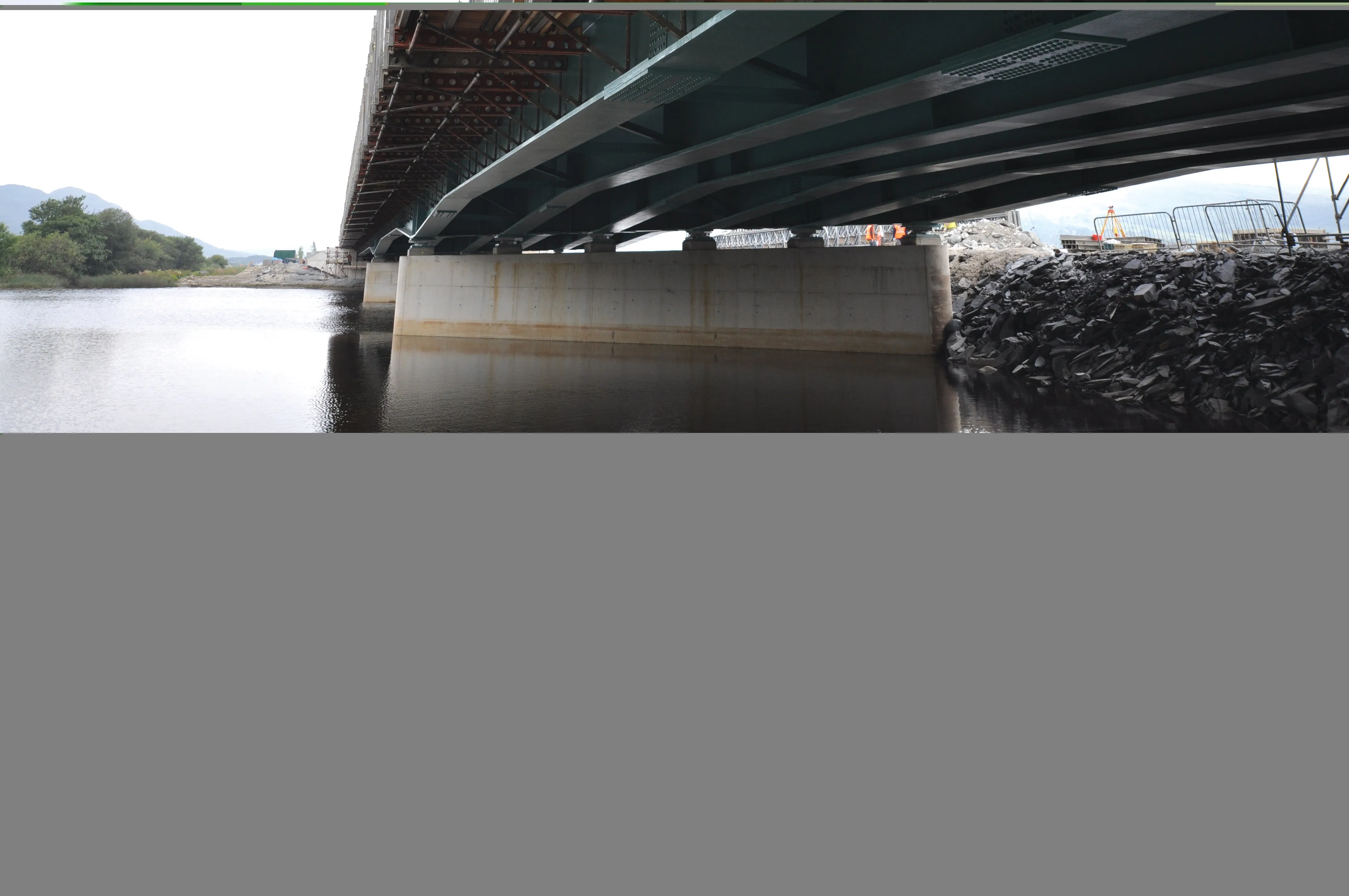
    Composite bridge specialist falsework, Paraslim, from RMD Kwikform is being used to construct a viaduct and rail over-bridge in Wales. Paraslim is supporting the £35 million (US$55.7 million) A487 Porthmadog, Minffordd and Tremadog Bypass constructed by a joint venture partnership of Balfour Beatty and Jones Bros Civil Engineering UK.
  • PERI's tall order in Mexico
    February 14, 2012
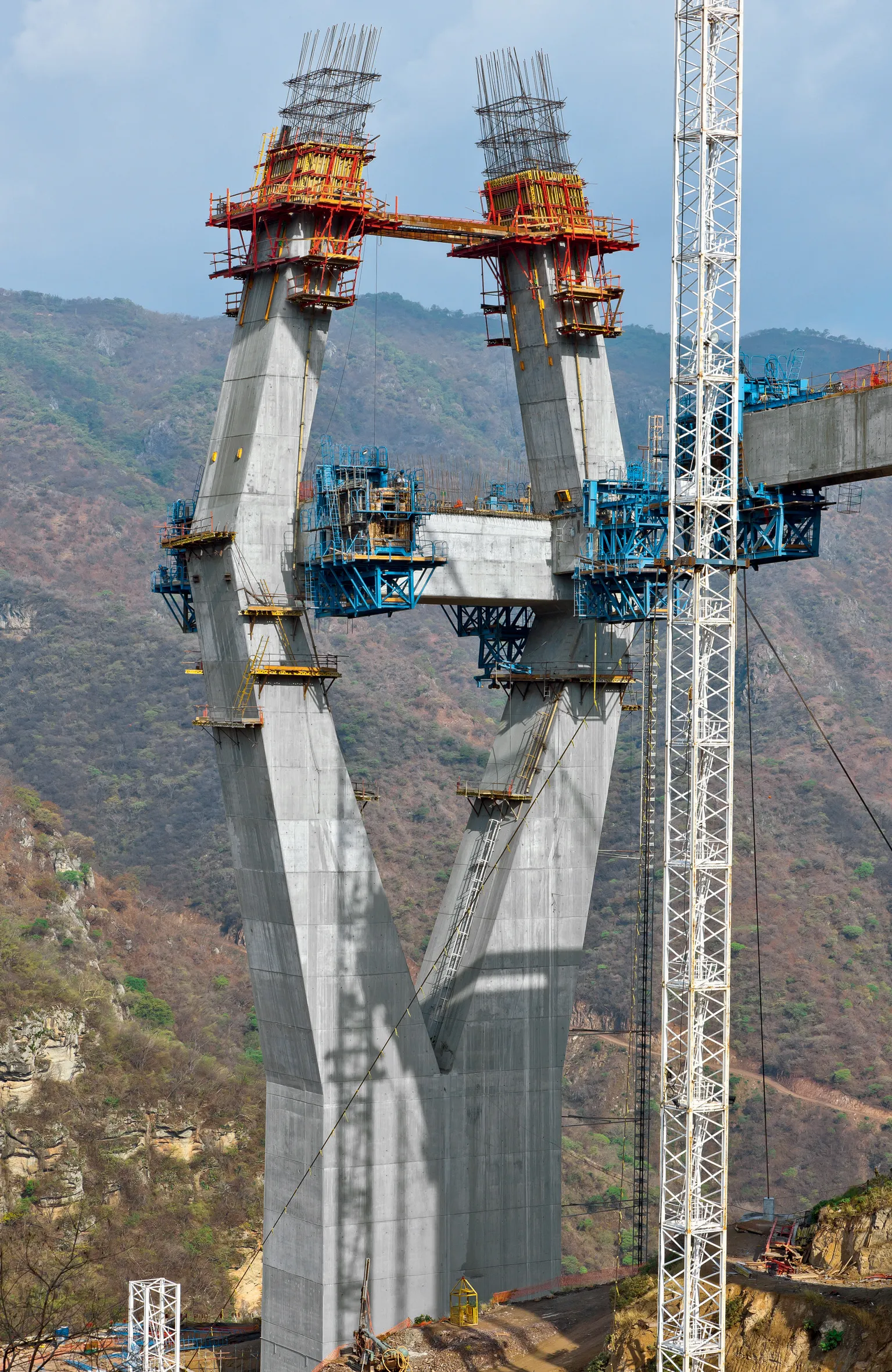
    The Baluarte Bridge (Puente Baluarte), part of a major highway project, ranks among the most outstanding infrastructure projects ever constructed in Mexico.
  • The side effect – paving with a road widener
    December 13, 2018
    Sidewinder UK has been using its novel road widener machines on a series of paving jobs, including smart motorway projects. Sidewinder UK has carried out work on the M6 smart motorway contract between junction 16 and junction 19. The company used one of its road wideners to place and grade the final layer of sub-base to the balanced central reservation in readiness for Tarmac Contracting to pave the base and binder courses. An estimated 5,000tonnes of sub-base was used in the initial 6.4km x 4.7m wide st
  • Severn Bridge resurfacing complete
    April 30, 2019
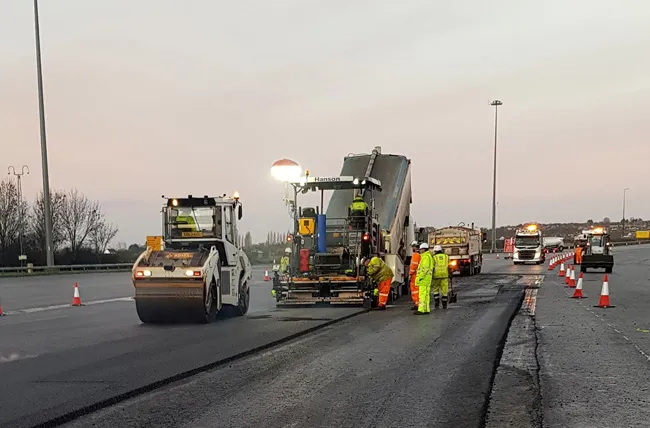
    Contractor Hanson has completed the latest phase of its resurfacing work on the Severn bridges following the removal of the toll booths and barriers. The contract for Highways England started in December 2018, when the tolls were abolished on the M4 Prince of Wales Bridge and M48 Severn Bridge, and resurfacing was needed for the new road layout. The move to provide free access for drivers from England into Wales is aimed at boosting the Welsh economy. Over the last few weeks Hanson has laid more than