Evonik adds Dynavis hydraulic additive to its INTERMAT lineup

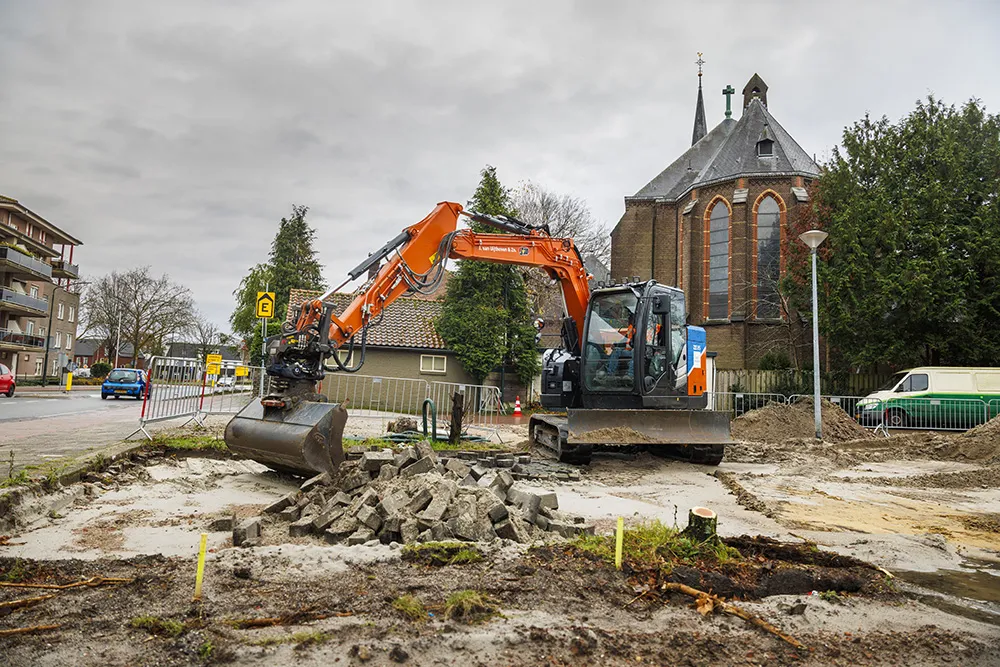
Dynavis, a hydraulic fluid additive, has been a money-saver for many heavy equipment operators and case studies confirming this will be on show at the Evonik stand at INTERMAT. Up to 30% more hydraulic power versus a conventional mono-grade ISO 46 fluid has been recorded, says Rolf Fianke, aftermarket support manager at Evonik, based in Darmstadt, Germany. Data has been collected over the past decade, much of it because Dynavis is used by many OEMs. But as yet Dynavis has not been highlighted as an in
January 30, 2015 Read time: 2 mins
7645 Dynavis, a hydraulic fluid additive, has been a money-saver for many heavy equipment operators and case studies confirming this will be on show at the 4009 Evonik stand at INTERMAT.

Up to 30% more hydraulic power versus a conventional mono-grade ISO 46 fluid has been recorded, says Rolf Fianke, aftermarket support manager at Evonik, based in Darmstadt, Germany.

Data has been collected over the past decade, much of it because Dynavis is used by many OEMs. But as yet Dynavis has not been highlighted as an integral part of new equipment. INTERMAT is where Evonik wants to bring Dynavis out of the shadows and have it become a visible stand-alone brand for buyers of equipment and for maintenance crews who examine hydraulic performances.

Higher hydraulic power can translate into money saving, and one chief executive of a southern German company estimated around €5,920 ($6,700) was saved over one year using Dynavis. He claims that his excavator noticeably maintained power when multiple functions were activated, versus when not using Dynavis.

In another case study, a Lithuanian mining company was using a track-mounted 36 tonne Kleeman MS 19 Z screening unit. During the six-month test period, the fluid was exposed to winter temperatures as low as minus 20C to more than 30C in the summer. The mining company said it found the unit had used around 15% less fuel when adding Dynavis into the machines hydraulics.
For more information on companies in this article

Related Content

  • Adavances in concrete vibration technology
    December 13, 2018
    The use of controlled frequency vibration (CFV) technology and its applications in construction continue to grow - *Paul Jaworski Controlled frequency vibration (CFV) technology has been around since the mid-1990s for concrete pavement applications. The technology has seen a gradual increase in acceptance, particularly in certain applications. For the 0-37mm (1.5”) slump pavement mix designs, many contractors were experiencing material separation due to speeds over 8,000vibrations/minute (VPM). With the wi
  • Market bullish at bauma China 2016 exhibition
    February 1, 2017
    Key manufacturers reported a return to business confidence in China at the recent bauma China 2016 construction equipment exhibition The event was held at the Shanghai New International Expo Centre (SNIEC) and attracted 170,000 visitors from 149 countries, despite the cold weather and constant rain that plagued its first two days. The healthy attendance is a reflection of the gradually improving Chinese market. The Chinese economy suffered a slump in business levels in recent years, following a boom per
  • High wheeled loading performance
    July 18, 2012
    High specification wheeled loaders are now available from an array of firms, Mike Woof reports In the competitive market for wheeled loaders, Caterpillar, Komatsu and Volvo CE are strong worldwide players with sales figures that many rivals would like to emulate. Their quality products also demand good resale values due to a reputation for longevity, yet other firms are also filling the gap in terms of quality and performance. An array of manufacturers are introducing improved machines to the European marke
  • The father of asset management speaks on the development of the concept
    May 24, 2016
    World Highways caught up with man who developed the concept of asset management for roads in the 1960s. Dr Ralph Haas is still researching in his native Canada, and commenting on potholes. The e-mail was brief. “You won't believe this, but I think I'm the last person on the planet without a cell phone.” That was quite an admission from Ralph Haas, distinguished Canadian professor emeritus. He was one of several civil engineers in the 1960s who developed the concept of managing roads as an integrated