Vejdirektoratet finishes €18.75 million LED update

The Danish Road Directorate, Vejdirektoratet, said lower operating costs of LED highway lights mean the return on investment could be only six years.
By David Arminas May 5, 2025 Read time: 2 mins
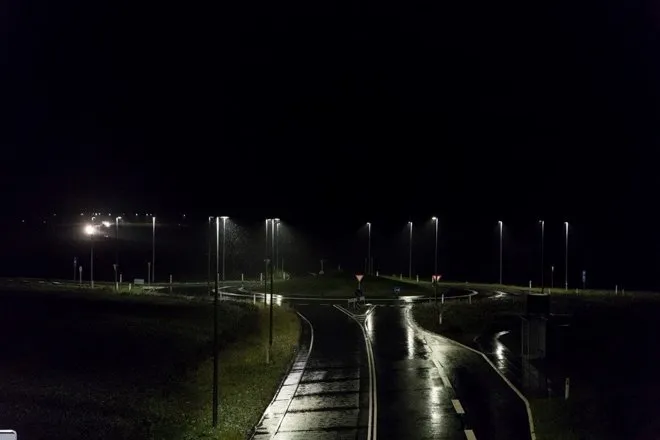
LED lights and reduced lighting levels is helping the Danish Road Directorate save money and energy (image courtesy Vejdirektoratet, the Danish Road Directorate)

The Danish Road Directorate, Vejdirektoratet, has completed its largest lighting project, replacement of 23,000 lamps on the national road network with modern LED lamps.

Vejdirektoratet also said it has removed lighting on motorway sections where it was deemed not essential. Overall, the project means that energy consumption for road lighting has been reduced by about 65%, according to Thomas Danielsen, Denmark’s transport minister.

Total investment is about €18.75 million. However, the lower operating costs mean that the investment is expected to be paid back in just under six years. At night, the light is automatically reduced to half the previous level in many places to save energy, where there is no need for much brighter light.

Last December, the directorate published an updated version of the Danish Road Lighting Handbook - one of the most used Danish standards to meet the Danish Road Lighting Guidelines and which is heavily adopted for state roads, municipalities and road infrastructure.

The updated handbook introduces three new terms and concepts concerning light pollution, good light and biodiversity. These are “environmental zones”, “G-index” and “mDER (Melanopic Daylight Efficacy Ratio)”.  

Last May 2024, the Danish Road Directorate published the report “The Impact of Lighting on Animals, Plants and Humans.” The report helped form the basis for the measures the directorate incorporated into the updated road lighting handbook.
For more information on companies in this article

Related Content

  • Road markings and microplastics
    May 13, 2024
    Recent regulations from the European Commission have exempted road markings from microplastic bans and restrictions, at least for the moment, explains the ERF.
  • Roads to Recovery after the pandemic
    January 11, 2021
    IRF president Bill Halkias shares the Federation’s view on post-Covid
  • New road safety system from World Bank
    July 13, 2020

    A new approach to road safety is being promoted by the World Bank (WB). This is intended to meet the needs of the new Environmental and Social Framework (ESF), which addresses traffic and road safety under Standard 4, Community Health and Safety. The standard requires that all WB projects avoid or minimise road safety risks and impacts. It applies not just to the communities where the project is being done, but also project workers and road users. Any project with potential road safety implications must develop measures and plans to address these risks.

  • Morocco’s new motorway links are boosting connectivity
    December 16, 2014
    Morocco’s massive motorway construction programme will improve transport connections and boost this North African country’s economy - Mike Woof reports A massive road building programme is transforming Morocco, with new motorways connecting cities and major towns, as well as many new rural roads being built. The Moroccan Government has set an impressive plan for its infrastructure investment that will see even the country’s small and remote villages having proper connections to the main road network. The