

At the recent World Road Congress in Abu Dhabi, Routes de France, the FNTP and the ERF presented initial results of an ongoing international benchmarking study that was launched in April.
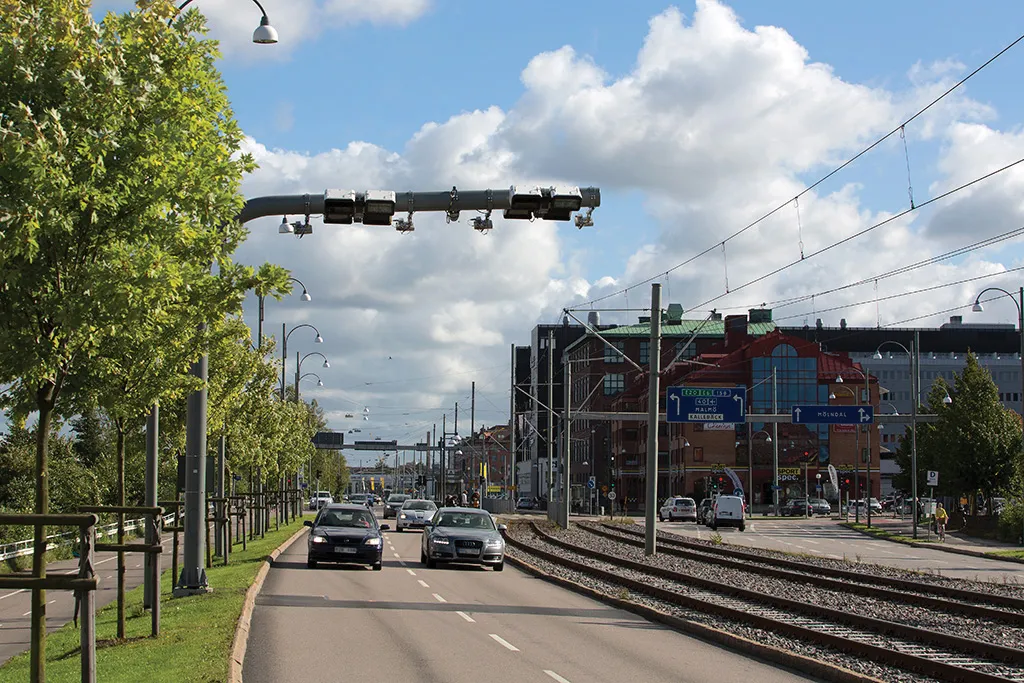
The objective of this study is to find out about the evolution and adaptation of road infrastructure and its equipment relating to new mobility. Initial findings indicate that digital transformation and environmental imperatives are accelerating initiatives in all the countries studied. The new mobilities all involve road and road transport.
In the opinion of road managers, the requirement for the adaptability of road infrastructure and equipment is higher than in the past. The road is at the crossroads of all types of mobility: new electric, connected and autonomous vehicles, development of active, shared, carbon-free mobility, implementation of charging infrastructure with a wide range of possible technologies - induction, conduction, energy recovery storage and more.
Europe and North America have the most advanced road networks. Nevertheless, they face two obstacles. One is the high cost of maintaining and optimising the network. The other obstacle is the search for an economic model that allows roads to be adapted to new mobility. Indeed, in a constrained budgetary context, the capacities and financing models to meet these two objectives have yet to be found.
Also, the growth of new mobility is mainly concentrated on the urban and interurban network. Europeans and Canadians are more inclined in the short term – around five years - toward the rapid development of the electric vehicle, a general electrification of the sector and a de facto electrification of roads. They see a medium-term integration of about 10 years for autonomous vehicles. Almost all countries have legislation opening possible experiments on autonomous vehicles; some European countries being the most advanced in the world.
The digitisation challenge
The need to digitise and connect road infrastructure, including its equipment, is also mentioned. We are thinking here of C-ITS (Connected and Integrated Transports Systems), V2X (Vehicle to Everything) technology and MaaS (Mobility as a Service). In this sense, northern Europe already has a more advanced level of reflection and experimentation than its other neighbours.
More specifically, Canada will have greater difficulty in ensuring the uniform development of autonomous and connected mobility, given its large geographical size coupled with a low population density.
Finally, Europe and Canada consider new mobility as the great opportunity to de-carbonise the transport sector.
South America is fully aware of the need to adapt road infrastructure. But it already has significant infrastructure needs and does not yet have a network with enough connectivity to support the development of new mobility. The current priority is to open up populations and promote economic development.
Regarding Asia, we must separate China as distinct from other countries studied - South Korea and Japan. In general, Asia also has a significant need for road infrastructure. The countries in the region are very much focused on the digitisation and connectivity of roads, with the introduction of 5G and "smart city" type experiments.
In addition, Asian countries are setting technical standards faster than Western countries. More specifically, China already plans to integrate new technologies in terms of connectivity and even the energy mode used, directly into the construction of the infrastructure it needs, by incorporating technical standards. The Chinese government is implementing a proactive industrial strategy.
Regulating new mobility
Among all the countries studied so far, France faces the same obstacles as its European neighbours. It has the challenge of maintaining and optimising its network on the one hand, and on the other hand seeks to meet the challenge of new mobility within a more limited budgetary framework than in the past. The many initiatives taken enable France to figure prominently in this study thanks to its National Strategy for the Development of Autonomous Vehicles in 2018 and other efforts to promote the deployment of autonomous vehicle experiments under the government’s Mobility Orientation Act.
There are also, in France, many private sector initiatives to improve interactions between autonomous vehicles and the road environment.
As in many other European countries, there is a real question in France about the conditions of acceptability to users and customers as well as charging solutions for the development of electric vehicles.
The study will continue until May 2020.
*Christophe Nicodème is director general of the European Union Road Federation - ERF