Bucket specialist Miller invests in manufacturing

Bucket specialist Miller is investing heavily in its manufacturing.
By MJ Woof October 18, 2023 Read time: 2 mins
Bucket specialist Miller has invested in new welding robots, boosting production capacity while ensuring quality

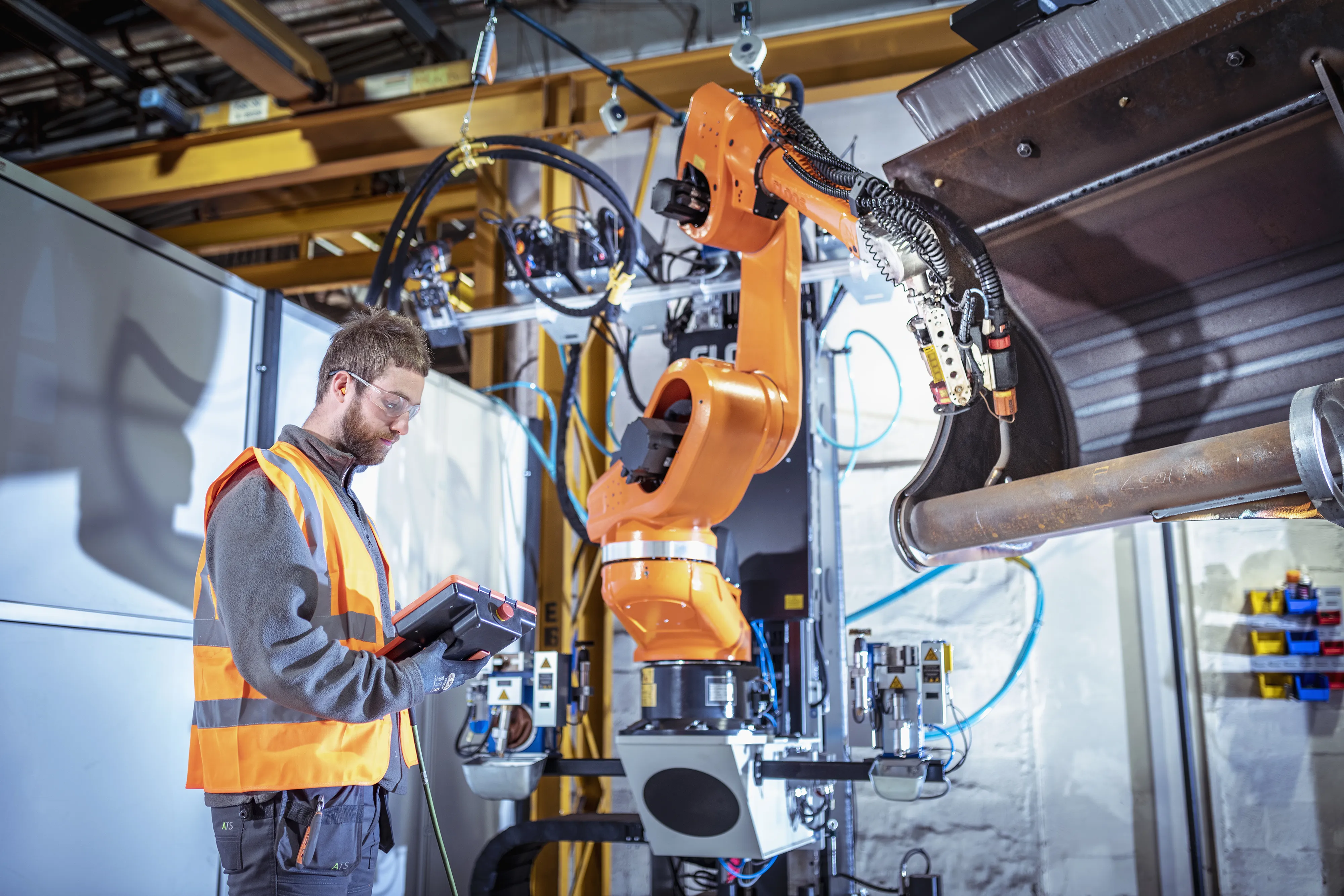
Bucket and coupler manufacturer Miller UK is boosting its manufacturing capabilities through upgrading its welding robots. The firm has invested in five new robots, which are now commissioned and in full operation. This move has increased Miller’s production capacity, as well as improved the safety of its workforce.

Miller says it has increased its welding speed and can deliver 100% weld consistencies on its product range. The new robots are developed by industry leaders in welding and automation, CLOOS and include two different model ranges, QRC 410-2.0, ideal for welding attachments for machines up to 45tonnes and two QRC 350-E models, capable of handling attachments for machines up to 100tonnes.

The company first invested in its welding robots in 2018. Recognising the value of these machines, Miller has now installed two of the larger sized machines, doubling production capacity.

Speaking about the investment, James Ross, commercial director at Miller said: “Manufacturing technology has always been a priority and it is very important that Miller continues to invest in the next generation of welding equipment and robotic automation which can transform the quality to consistent market leading levels.

“With minimal production downtime required, and the ability to operate for extended periods of time, this has significantly increased our manufacturing capabilities – particularly to produce much larger buckets for extreme applications - to meet our demand and significantly reduce our lead times for customers.”

The QRC 350-E robot model boasts a range of smart features. Comprising 12 axis movement, including the robot arm, the machine is designed to allow for more manipulation of parts, which increases its versatility and ability to reach more difficult areas on a workpiece. This allows Miller to weld more, whilst reducing the manual labour required once the robot process has been completed.

Gregg Hudson, global manufacturing leader said: “The new robot really does step our production capabilities up to the next level. The weld finish achieved from this machine is exceptional.”

 

For more information on companies in this article

Related Content

  • Indeco cuts up New York City’s old Kosciuszko Bridge
    November 23, 2017
    An Indeco ISS 45/90 is proving essential for demolishing the old Kosciuszko Bridge in New York City. New York City’s old 1.9km Kosciuszko Bridge, which crosses Newtown Creek connecting Green Point, Brooklyn with Maspeth, Queens, has been out of service since April. By the end of the year, the polygonal Warren through-truss structure will be no more. To replace the old bridge, in 2009, the New York State Department of Transportation planned the construction of two cable-stayed replacement bridges.
  • Laser scanning focuses on asset management
    January 9, 2015
    Laser scanners and improved data collection and analysis software are making light of asset management surveying. David Arminas reports The age of the laser scanner is upon us, taking over from traditional manual methods of surveying, data collection and processing. These new technical developments are making it much easier to process and use the data captured and are providing highways engineers with powerful tools to record, map and visualise their assets. This is good news for highways authorities
  • Hillhead promises industry showcase
    June 12, 2012
    Hillhead 2012, the three-day biennial flagship event for the quarrying, recycling and heavy construction industries, is set to be a sell-out. Guy Woodford looks at what a number of major companies will be exhibiting during the show being held next month at Buxton Quarry in Derbyshire With 400 exhibitors already confirmed Hillhead 2012, taking place 19-21 June, is set to draw bumper crowds and provide crucial new business opportunities for companies involved in quarrying, recycling and heavy construction. Ca
  • More efficient asphalt output from new plants
    November 20, 2015
    Advances in asphalt plant design offer major gains in product throughput and quality, while also allowing for warm asphalt and increased recycling The asphalt sector is constantly looking for ways to optimise production, lower costs and improve product quality and consistency. Competition is fierce in the asphalt plant market, with several of the key companies working hard to develop new and more efficient technologies, as well as equipment that is more versatile and more mobile. Advances have been made