Eurovia meets the 100% RAP “Recyclee” challenge on a French motorway

Eurovia says that it has successfully paved a 1km stretch of a French motorway using 100% recycled asphalt pavement – a global first for RAP. Eurovia said that the “fully recycled road”, done in conjunction with its parent company VINCI Autoroutes, is part of a major motorway renovation project on the A10 between Pons and Saint-Aubin in southwest France. The road is the result of two years of research and a partnership with asphalt plant equipment maker Marini-Ermont of the Fayat group. Marini-Ermont
October 25, 2018 Read time: 3 mins
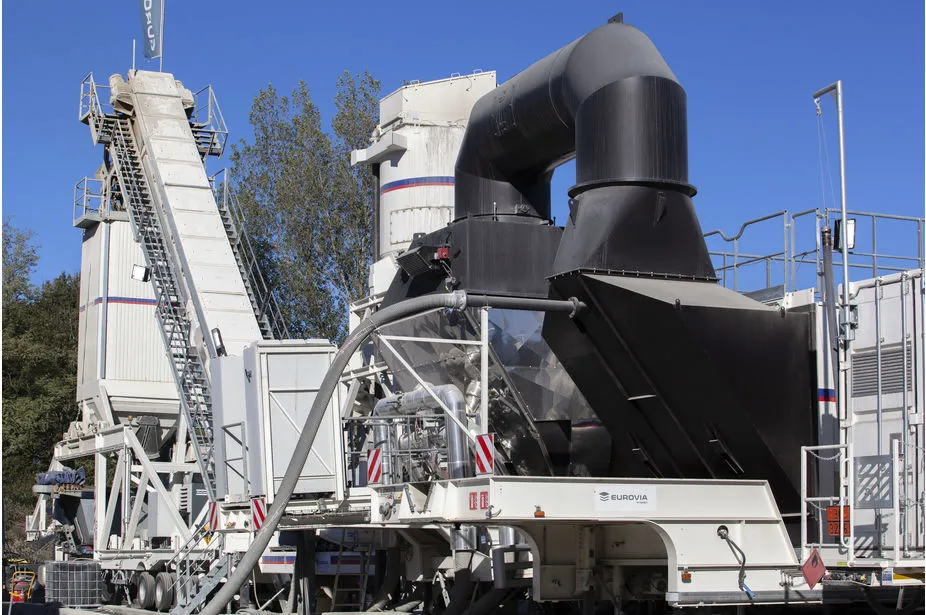
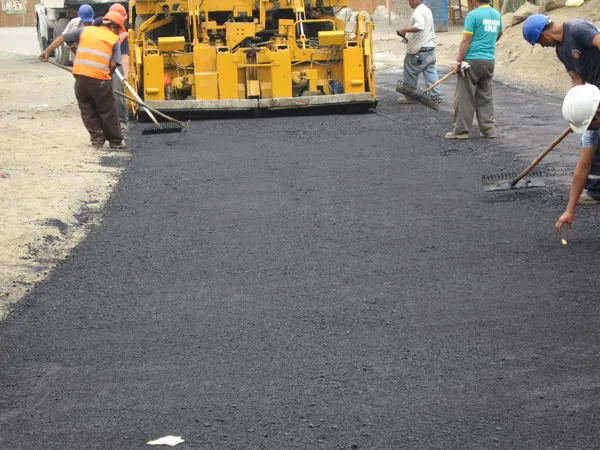
Not a virgin in sight: Marini-Ermont created the TRX100% mobile continuous asphalt plant to use 100% RAP

3281 Eurovia says that it has successfully paved a 1km stretch of a French motorway using 100% recycled asphalt pavement – a global first for RAP.

Eurovia said that the “fully recycled road”, done in conjunction with its parent company 6531 VINCI Autoroutes, is part of a major motorway renovation project on the A10 between Pons and Saint-Aubin in southwest France.

The road is the result of two years of research and a partnership with asphalt plant equipment maker Marini-Ermont of the 2779 Fayat group. Marini-Ermont created the TRX100% mobile continuous asphalt plant that can handle up to 100% of asphalt aggregates that originate at nearby road maintenance sites.

Other partners include the government of the Nouvelle Aquitaine region and PACA Laboratories.

This development represents significant progress compared with the current recycling rates of 50-60%, Eurovia said in a written statement.

The bulk of the supply can be sourced from milling material produced by the site. This would partly or fully protect natural  resources and keep transport logistics to a minimum. It also would cut up 50% the site’s carbon footprint, Eurovia claimed.

VINCI Autoroutes, which operates nearly 4,500km of French motorways, is part of the French global infrastructure company VINCI. The project to use 100% RAP is one of four similarly environmentally based projects that together make up the “Route du futur” scheme launched by ADEME, France’s Environment and Energy Management Agency.

Routes du future is, in turn, part of the Investing for the Future Programme to promote the development of innovative and ambitious industrial solutions to reduce the environmental impact of road infrastructure and support the energy transition in the road industry.

The three other Routes du future project are NOVATHERM, I-Street and REGIC.


The NOVATHERM project, being coordinated by Eurovia, includes working with the governments of the Auvergne-Rhône-Alpes, Nouvelle Aquitaine and the Ile-de-France regions. The object is to harness the solar-induced energy of a road and channel it into geothermal or biomass energy for use in nearby towns, be it for street lighting or electricity for shops and factories or social housing heating.

Part of the NOVATHERM work is to explore the extraction of heat during the hot summer months and during winter using the technology to reverse the energy flow to heat the pavement to reduce the risk of ice and to melt snow.

I-STREET is a project coordinated by EIFFAGE and done by TOTAL, French research group IFSTTAR using its fatigue carousel in Nantes and pigment producer PME OLIKROM. The goal is to develop more wear-resistant coatings for asphalt.

The use of “intelligent geo-synthetic reinforcements” – project REGIC – is to inhibit the creation of cavities in pavement. The work is being done by engineering textile manufacturer Texinov in conjunction with Ineris (Institut national de l'environnement industriel et des risques) and the laboratory 3SR (Sols, Solides, Structures, Risques).
For more information on companies in this article

Related Content

  • Speed limiters will limit fatalities, says the TRL
    July 29, 2019
    The soon-to-be mandatory speed limiters on vehicles in the European Union will make all safety other features more efficient, according the UK-based Transport Research Laboratory. In March the European Parliament passed a law that safety features such as intelligent speed assistance and advanced emergency-braking system must be installed in new vehicles from May 2022. They form part of the EU’s new suite of safety measures. TRL, which provided input for the European Commission regarding the formulatio
  • Bitumen additives raise environmental questions
    February 14, 2012
    New products, including additives, are coming onto the market to help reduce the cost of producing bitumen. Patrick smith reports. According to Eng. Paolo Visconti of Iterchimica, environmental issues and the health and safety of operators of manufacturing plants and workers laying bituminous mixes have raised long debates on the possible harmfulness of fumes which are emitted when heating these mixes at the temperatures (160-180°C) required for their production. "If, on the one hand, the effects on operato
  • The Fayat Group is seeing strong turnover in these strange times
    November 14, 2022
    Fayat Group president Jean-Claude Fayat discussed the firm’s business developments with Mike Woof
  • LiuGong embraces Industry 4.0
    November 27, 2018
    LiuGong chairman Zeng Guang’an says that the firm is fully embracing Industry 4.0 technology. Coupled with ongoing machine development, an expanding global sales and manufacturing network and long-established strong relationships with customers and suppliers, this is enabling the Chinese construction equipment giant to target RMB 50 billion (US$7.18bn) operating revenue by 2025. Chairman Zeng outlined the impressive scale of LiuGong’s future ambitions during an impassioned speech in front of an audi