
The 60km stretch of Phase 1 of the project was completed just in time for the 2021 Africa Cup of Nations football tournament, which took place in Yaoundé in early 2022.
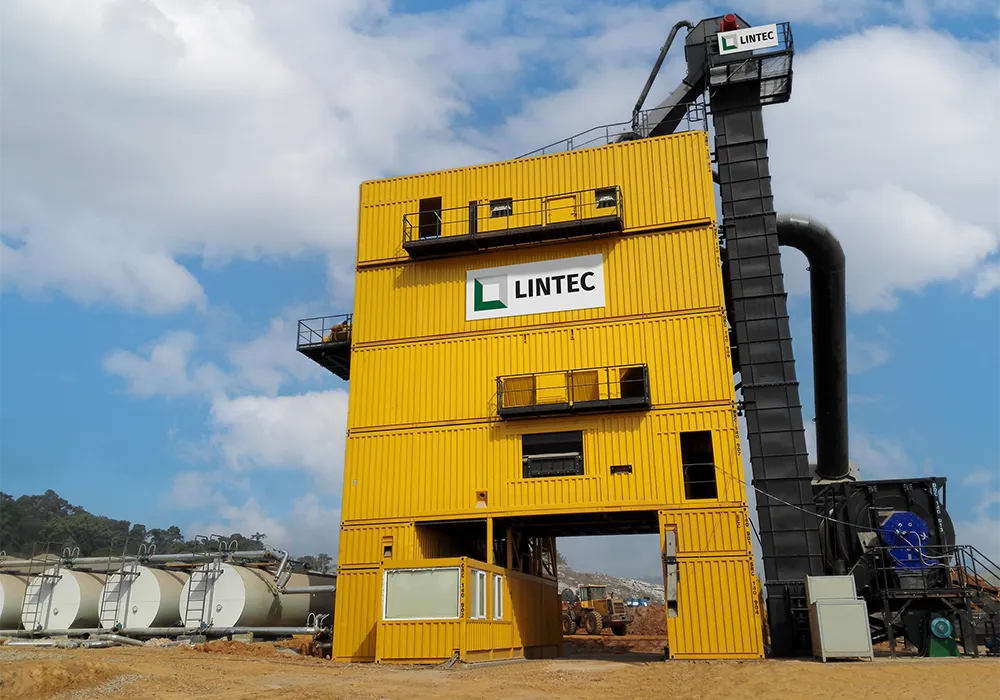
The plant played a pivotal role in the construction of the expressway, connecting capital Yaoundé with its largest city, Douala, home to the region’s major airport and largest port.
The rapid growth of traffic on the old National Road No 3 had left it struggling to support the economic and population growth of the two cities. Once labelled the world’s sixth-most dangerous road, at one time it was even responsible for a third of the country’s crashes; the combined result of high traffic levels and neglected infrastructure.
A brand-new road was required and, in 2011, plans were confirmed for the construction of 196km of six lanes of dual carriageway, divided by a 5m-wide median strip. This would reduce the total travel distance between the two cities from 265km to 215km and allow the introduction of a 110km/h speed limit on the route.
In January 2015, China First Highway Engineering Company (CFHEC), a subsidiary of China Communications Construction Company, began work on Phase 1. This involved the construction of a 60km stretch between Yaoundé and Bibodi, plus 25km of access roads connecting it with National Road No3. At 98% progress in January 2022, the next step was to finalise construction of functional infrastructure, including five interchanges, nine toll booths, three rest areas, two service areas and 11 river crossings.
“This was such an important project that the government made opening up the 60km of Phase 1 a priority,” said Tony Liu, CEO, Lintec & Linnhoff China. “Progress had suffered from the frequent heavy rains and other setbacks.”
The mixing plant’s containerised design played an important role, protecting the working components from the harsh weather, reducing maintenance demands while also offering increased security by restricting access to just one lockable door.
The CSM4000 has an output of 320tonnes/hour of asphalt in batch sizes of 4tonnes and the containerised design enables it to be transported to other jobsites quickly. Each container houses the key components, enabling fast commissioning onsite. Offering fast erection and relocation times for large-capacity asphalt plants, these units require no concrete foundations to be prepared at the next destination due to their flat, rigid surface area ensuring high stability on compacted soil.
“It’s always rewarding to play a part in enabling such vital improvements to a country’s infrastructure,” concludes Tony. “The old National Road No 3 was slowing the country’s growth, and the problem was only worsening as it struggled to cope with rising traffic levels. Building Cameroon’s first expressway improved the lives of ordinary citizens through enhanced public safety, greater GDP and speeding up access between two major hubs.”
The cost of Phase 1 has been estimated at between US$441 million and $528 million. Phase 2 will be carried out under the PPP model for the remaining 136km to Douala at an estimated cost of $1.27 billion.